Also on the truck · Eastside
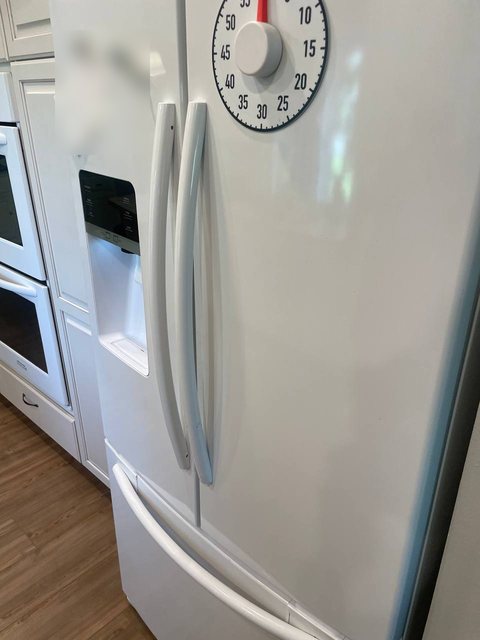
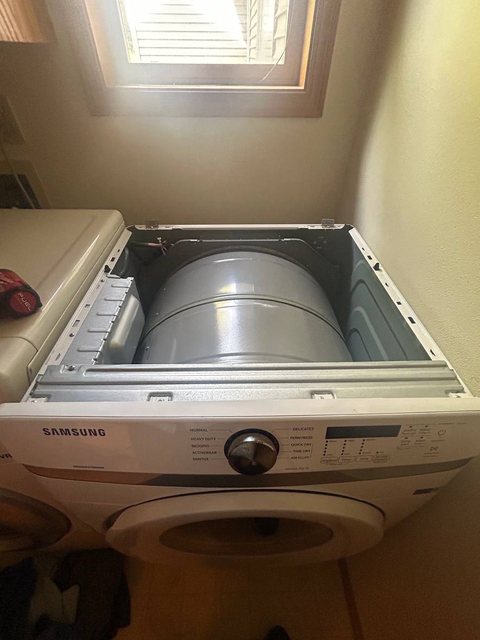
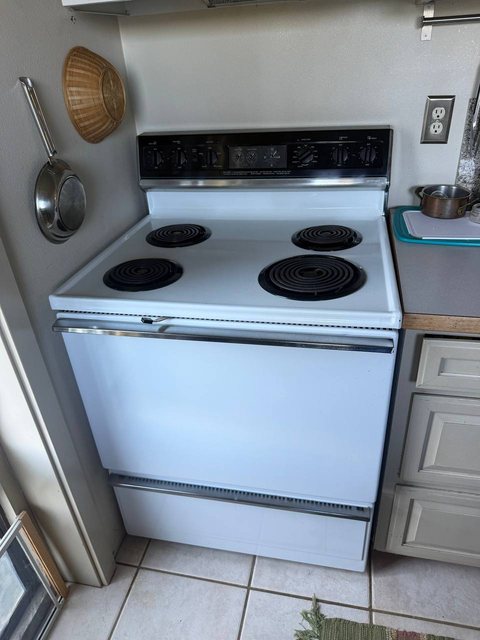
The other five
$99 to diagnose, one written figure, printed coverage — the same for every machine we take in Eastside.
Most Eastside washers live in a basement reached by a steep stair, draining into a utility sink or a floor drain that was poured in 1948.
Weekdays 7:30–5:30 · Saturday 9–1 · closed Sunday · Woodland Square Loop, at the Olympia–Lacey line
$99 to diagnose, one written figure, printed coverage — the same for every machine we take in Eastside.
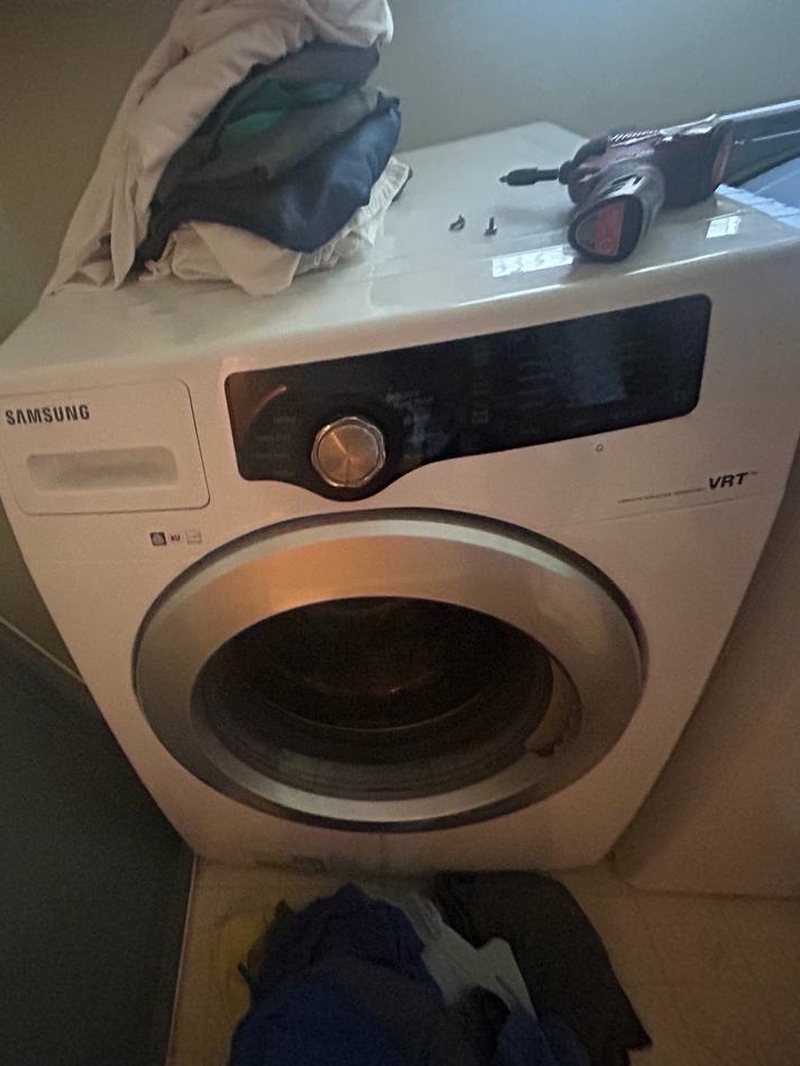
The washer in a Bigelow or Lions Park house does its work below grade, on concrete that has never once been level, beside a laundry tub that doubles as its drain. The outlet may be a two-prong original with a grounding adapter. The supply pipes are sometimes galvanized and shed rust into the inlet screens. None of that is the washer's fault, but all of it shapes how the washer fails.
We know these basements. The technician arrives with a headlamp, a level, and the patience to carry a dolly down a stair with a low beam at the bottom. Then the machine gets tested where it stands, and you hear what failed in language that makes sense.
The tub fills, the timer hums, nothing moves. Older top-loaders do this when the lid switch, the motor coupler, or a transmission with stripped gears gives out. We test the switch and coupler first, since either is a quick fix, and only then talk about the transmission, where the age of the machine decides whether the repair is sensible.
Concrete floors in 1930s basements slope toward the drain, and a washer with worn suspension rods or a bent leg will march right to it. We level the machine on its feet, replace tired suspension parts, and check the snubber ring or shocks. Sometimes the fix is a rubber pad under the front feet and a firm talking-to about overloading.
Olympia's city water carries manganese, and old galvanized supply lines add iron flakes. Together they leave gray streaks and orange dots on a white load. We check the inlet screens, inspect the basket for rust at the rim, and run a cleaning cycle. If the basket itself is corroding, we tell you honestly what that means for the machine.
A washer pumps out faster than a clogged floor drain or a lint-choked utility sink can swallow. Water backs up, the basement floor floods, and the washer takes the blame. We test the pump and drain hose, then look at where the water goes. A lint trap on the hose end and a snaked drain often close this call.
Mechanical timers on older washers wear their contacts and stall at the same spot every load. Newer machines do the same thing with a control board or a stuck water-level switch. We advance the timer by hand, meter the contacts, test the pressure switch and its hose, and replace whichever part is holding the cycle hostage.
A modern front-loader wants a grounded outlet and clean power. On an ungrounded Eastside circuit it may throw electrical faults, trip a GFCI, or refuse to lock the door. We test the supply voltage and ground at the outlet, read the fault codes, and separate a washer problem from a wiring problem before any part is ordered.
It is $99 to have us find the fault: meter testing, an honest explanation of what broke, a written figure for the fix. Say go and the repair figure swallows the $99; say stop and $99 is the only money that changes hands. No hourly rate, no mileage for a shop that sits one neighborhood over across the Lacey line, and no repair prices quoted before a technician has seen the machine.
Landlords with Eastside rentals use us the same way homeowners do, with one difference: the tenant handles the door while the owner handles the text approval. An emailed invoice carrying the printed warranty term follows, and any code we were given is dropped when the ticket closes. If your washer is still inside the manufacturer's coverage window, we bring that up before you commit to anything.
Probably not. The pump is doing its job and the drain cannot keep up. Old utility sinks and floor drains clog with decades of lint and soap scum. We confirm the pump and hose are sound, then show you the real bottleneck. A lint sock on the hose and a drain cleaning usually end the flooding.
Many older top-loaders are worth fixing because their failures are cheap parts: lid switches, couplers, belts, water valves. A transmission or a rusted basket changes the math. We give you the figure and our honest opinion, and the $99 diagnostic is yours to walk away from if replacement makes more sense.
It will run, but it may throw faults and it will not be grounded, which matters for a machine that stands in water. We can test what the outlet is delivering. If it needs updating, that is an electrician's job, and hearing that from us beats buying a part with no purpose.
Iron and manganese in the water, often from old galvanized pipe rather than the city supply itself. The inlet screens catch some, the rest lands on the fabric. We clean the screens and check the basket for rust. A whole-house filter is a plumber's conversation, but we can tell you if the washer is contributing.
Leaks and flooding get the first available slot. Everything else is usually scheduled within the week. We work 7:30 to 5:30 on weekdays and Saturday mornings until 1, and we are happy to text when the technician is on the way so you can unlock the side door.
What each code usually points at, what is safe to check, and where to stop.
OPEN THE CODE SHEET →F5E2 · F8E1 · F9E1What each code usually points at, what is safe to check, and where to stop.
OPEN THE CODE SHEET →The price goes on paper before a screw comes out.
Ring or use the form; a phone photo of the display or the model sticker saves a step. We ring back with an arrival window and text again as the van pulls off Woodland Square Loop.
The technician tests the suspect part with instruments, tells you in plain words what gave out, and writes the repair down as a single price. Your $99 is already inside that number.
Fill valves, defrost heaters, igniters, drum rollers, drain pumps, relays — the things well water, salt air and PSE outages wear out on this shore of the inlet. If we have to order something, the second trip is ours to make, not yours to pay for.
You watch the machine finish a whole cycle, the kick panels and the floor go back the way they were, and the warranty term is typed onto the invoice.
Tell us over the phone. For $99 a technician tests the machine and writes the repair down as one price with that $99 folded in, and the invoice carries the warranty term in print.