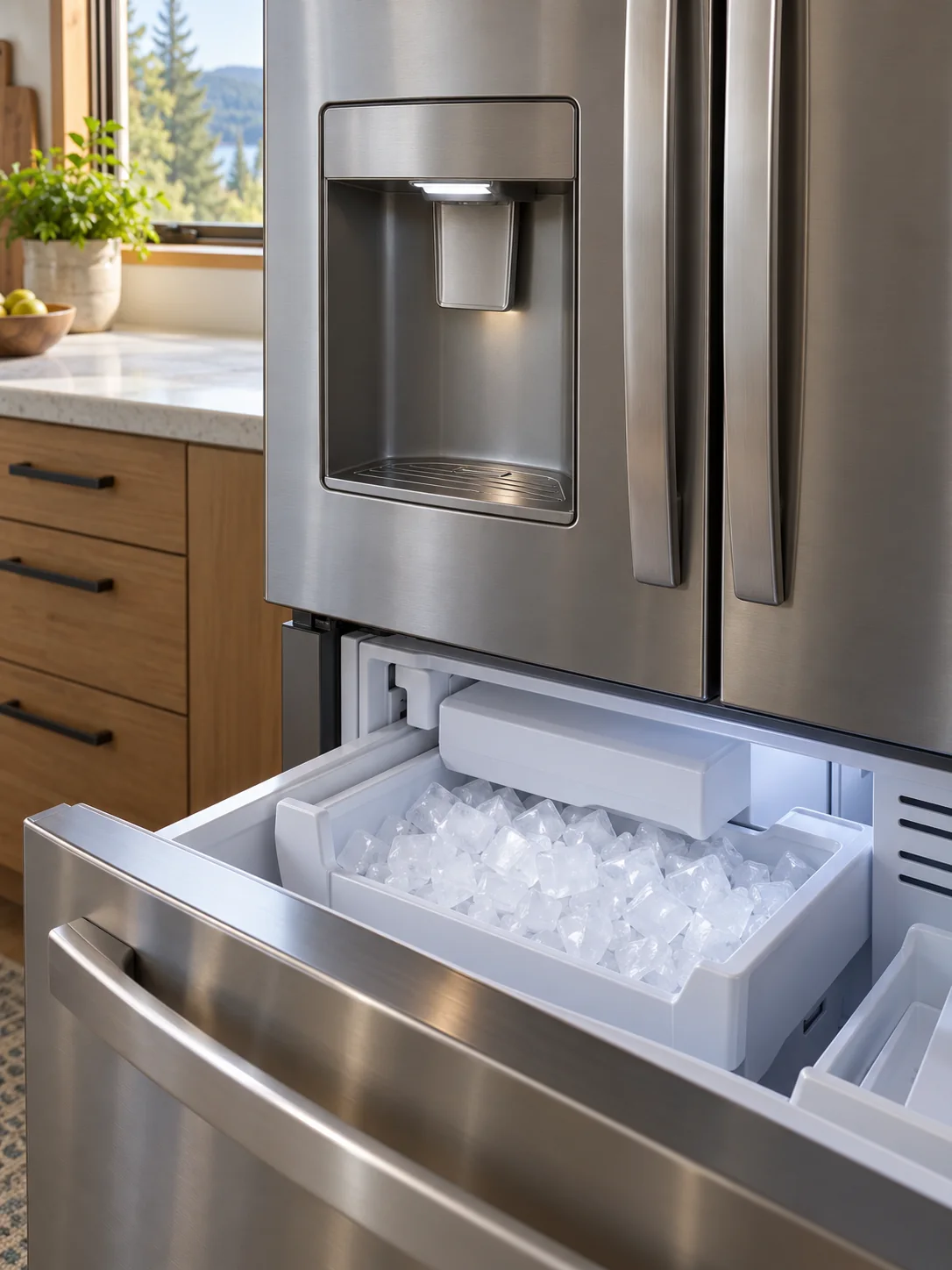
Also on the truck · Olympia
The other five
$99 to diagnose, one written figure, printed coverage — the same for every machine we take in Olympia.
Olympia dishwashers face two kinds of water: in town, groundwater with some hardness and manganese, and north of the college or out around the lakes, well water thick with iron that scales elements and narrows fill valves.
Weekdays 7:30–5:30 · Saturday 9–1 · closed Sunday · Woodland Square Loop, at the Olympia–Lacey line
$99 to diagnose, one written figure, printed coverage — the same for every machine we take in Olympia.
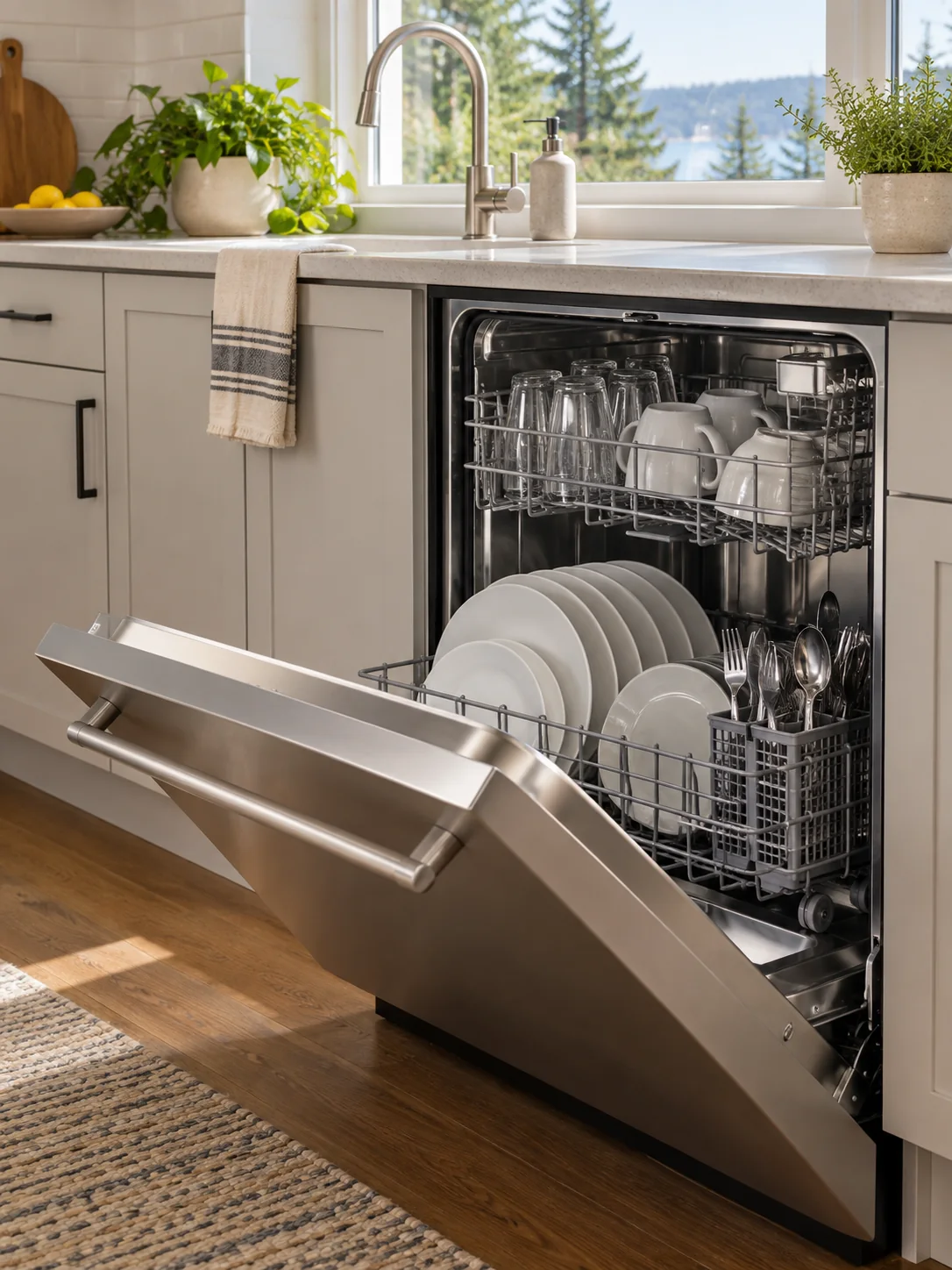
A dishwasher announces trouble quietly. Glasses come out cloudy, a film builds inside the door, gray water lingers in the sump when the cycle ends, or the cabinet floor is swelling from a leak nobody noticed. By the time someone calls, the machine has usually been misbehaving for weeks, so a good part of the visit is simply listening to what changed and when.
Where you live tells us a lot. A Bosch in a downtown condo on city water fails differently from a builder-grade unit in a Steamboat Island kitchen fed by an iron-rich well and draining to septic. We bring pumps, valves, gaskets and heating elements chosen for both, and we look at the plumbing around the machine as carefully as the machine itself.
Leftover water means the drain side has failed somewhere between sump and sink. The pump may have burned out or jammed on a shard of glass, the check valve may be stuck, or the counter air gap may be packed with debris. On septic properties around Mud Bay and Black Lake we also trace the drain hose, since a sagging hose invites sink water back into the tub.
Well water from the glacial till around Summit Lake, Griffin and Delphi Road leaves lime and iron behind every time the tub heats. The film coats glasses, the spray arms narrow, and the element wears a crust that stretches every cycle. We descale the tub, clear the arm nozzles, check the element and rinse-aid dispenser, and explain how a softener upstream changes the picture.
A dishwasher that starts, hums and errors out dry has a fill problem. Iron and manganese from a well shrink the inlet valve's opening until only a trickle passes; on city water, the solenoid simply fails with age. We measure flow at the supply line, test the valve coil and the float switch that tells the control the tub is full, and replace the piece that reads wrong.
A puddle in front of the dishwasher usually traces to the door gasket, the bottom seal, or a split in a spray arm that aims a jet at the door seam. Occasionally the tub itself has rusted through at a rack roller hole. We run water with the outer panel off so we can watch, find where it actually escapes, and fix that rather than the gasket everyone assumes.
When the load comes out wet and the tub feels cool, either the element has died, its relay has quit, or the thermostat that confirms temperature has drifted. On some models a failed element also stalls the cycle for hours. We test the element's resistance, check the relay on the control board, and confirm the vent fan on drying models actually turns.
Built-in European dishwashers in West Bay condos and Cooper Point kitchens report specific faults through their display, from a leak sensor trip in the base pan to a heat pump or circulation motor error. Each code narrows the search considerably. We read the fault, test the component it points to, and replace it with the correct part, with the panel-ready front reinstalled and aligned when we finish.
Every dishwasher visit opens with a $99 diagnostic, priced the same at a Capitol Way condo or a cabin far up Summit Lake Shore Road. The technician finds the fault, explains it, and writes a single repair figure. Agree to the work and that $99 has already been absorbed into the figure. Pass on it and your bill stays at $99, with our honest view of whether a machine that age deserves the money.
Warranty terms for part and labor are printed on the invoice. Ordered parts mean a return on our schedule, and that return is not billed. Maker coverage is confirmed first, and if it applies, we say so. Landlords and second-home owners text their approval, get the invoice by email, and know a gate or dock code is kept only while the job is open.
Probably not broken, but working against hard water. Wells around Steamboat Island, Griffin and Delphi Road leave lime and iron deposits, and even city water carries enough hardness to film glasses over time. A descaling, a clean set of spray arms and a working rinse-aid dispenser usually fix it. If the film keeps returning fast, a softener upstream is the lasting answer.
Yes. On septic properties outside the LOTT sewer area, the drain hose needs a proper high loop or air gap so sink water cannot back into the tub, and food solids should be scraped rather than left for the chopper. We check the drain routing on every rural visit, because a dishwasher that keeps re-washing sink backflow will never come clean.
We repair Bosch, Miele, Thermador and other European built-ins regularly, especially in downtown and West Bay condos and Cooper Point kitchens. They use different pumps, sensors and fault codes than domestic brands, and we carry the tools and diagnostic knowledge for them. We are independent, so we are not tied to any maker, and we say when coverage still applies.
A very long cycle usually means the water is not reaching temperature. The machine keeps heating and waiting until a thermostat is satisfied, and if the heating element is scaled over or partly failed, that takes forever. Slow filling from a narrowed inlet valve on well water produces the same effect. A meter and a flow check settle both in short order.
Often it is. Drain pumps, inlet valves, door gaskets and heating elements are modest parts, and replacing one can buy years of service. Where the tub has rusted, the control board and pump have both failed, or the machine is a bottom-tier model past a decade old, we will tell you plainly that replacement is the smarter spend.
The price goes on paper before a screw comes out.
Ring or use the form; a phone photo of the display or the model sticker saves a step. We ring back with an arrival window and text again as the van pulls off Woodland Square Loop.
The technician tests the suspect part with instruments, tells you in plain words what gave out, and writes the repair down as a single price. Your $99 is already inside that number.
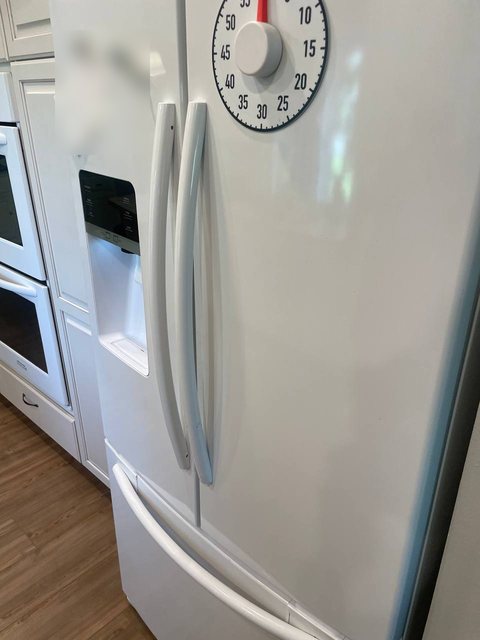
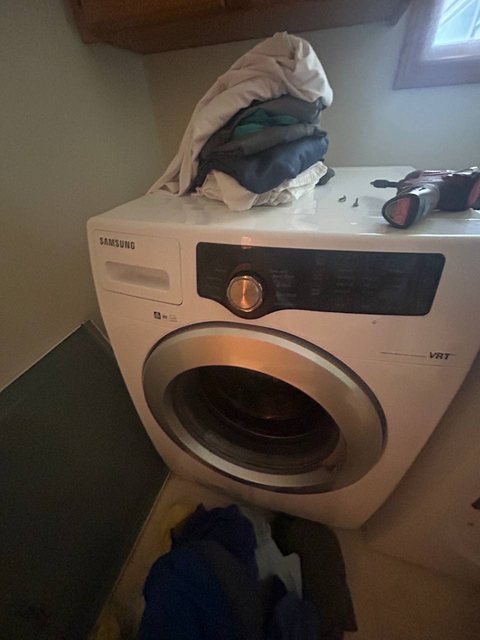
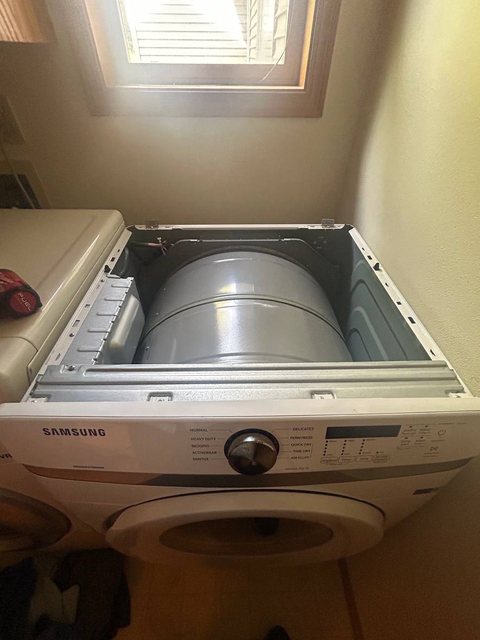
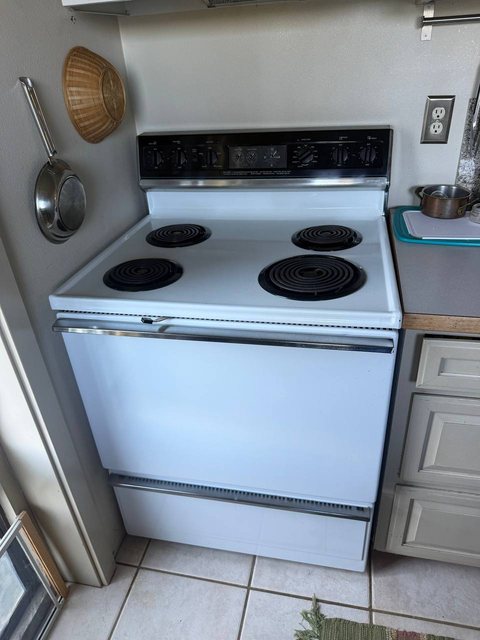
Fill valves, defrost heaters, igniters, drum rollers, drain pumps, relays — the things well water, salt air and PSE outages wear out on this shore of the inlet. If we have to order something, the second trip is ours to make, not yours to pay for.
You watch the machine finish a whole cycle, the kick panels and the floor go back the way they were, and the warranty term is typed onto the invoice.
Tell us over the phone. For $99 a technician tests the machine and writes the repair down as one price with that $99 folded in, and the invoice carries the warranty term in print.