In the van
Whirlpool washers have spoken two languages over twenty years: two-letter codes such as LF and LD on older top-loaders, and F-and-E pairs such as F8E1 on current machines.
Weekdays 7:30–5:30 · Saturday 9–1 · closed Sunday · Woodland Square Loop, at the Olympia–Lacey line
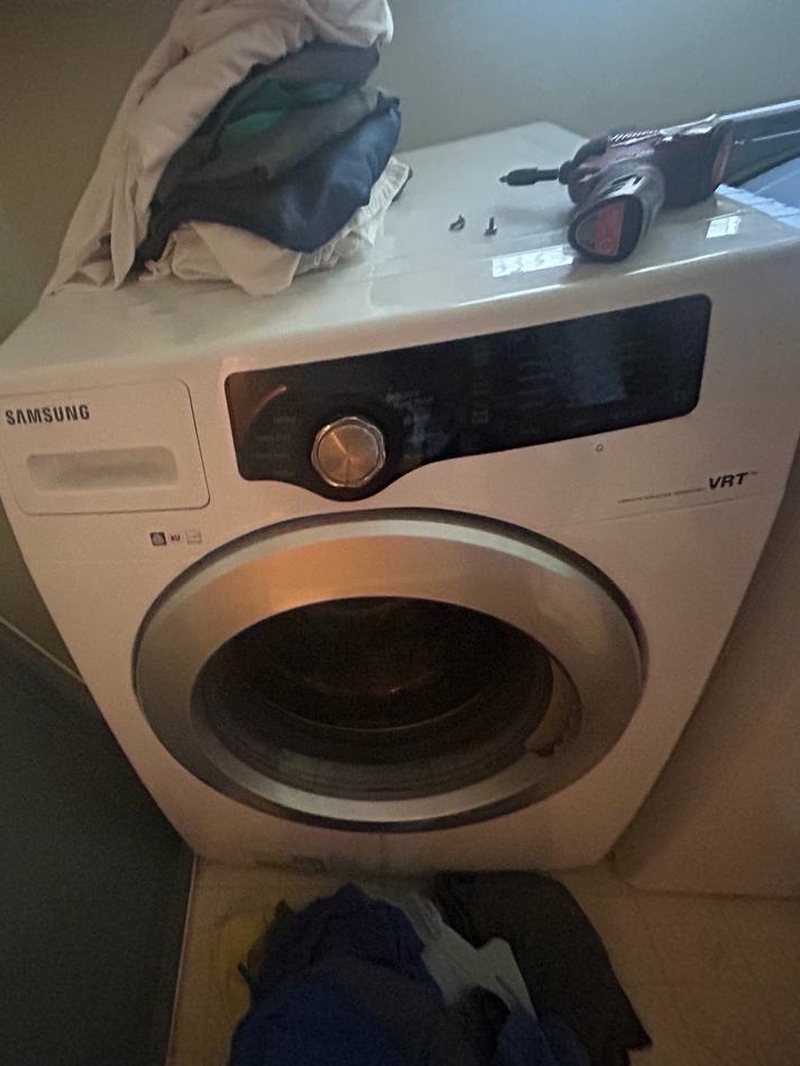
On an older Whirlpool top-loader the control has few sensors, so it reports in symptoms: LF means the fill took too long, LD means the drain did, Sd means suds were detected, oL and uL mean the load was too heavy or off balance. Newer front-load and HE top-load machines carry more sensing, and the F number names the system while the E number narrows the fault. F8E1 is a fill problem, F9E1 a drain problem, F5E2 a door-lock problem, F7E1 a motor-speed problem.
In the 1920s houses of the Eastside and South Capitol the washer is usually in the basement, fed by galvanized pipe and draining into a tall standpipe or a floor sink. Low supply pressure gives us F8E1 and LF; a standpipe that sits too high or a hose that siphons gives us F9E1 and LD. Add a PSE outage in the middle of a spin and the door lock can jam with F5E2 on the screen, which is why a good share of our Whirlpool calls come in on the morning after a storm.
| Code | What the display means | What is usually behind it | What we do |
|---|---|---|---|
| F8E1 · LF | Fill took longer than the control allows | Usually low pressure at the hoses, half-shut taps, clogged inlet screens, or an inlet valve with one weak coil; iron on well water clogs screens fast | Measure the flow at the hose ends, service the screens, and test each valve coil so we replace only what has failed |
| F9E1 · LD | Drain took longer than allowed | A drain hose shoved deep in a standpipe, a standpipe above the top of the tub, a clogged pump trap, or a pump that has lost an impeller vane | Correct the hose height and routing, clear the pump and trap, and replace the drain pump when it moves too little water |
| F5E2 | Door lock failed to lock | Often the lock stalled when power dropped mid-cycle, sometimes a bent strike or a lock assembly with a burned coil | Release and inspect the lock, check the strike alignment, and replace the lock assembly if its coil or switch has failed |
| F5E1 · F5E3 | Door switch reads open, or the lock will not release | A door not shut hard enough, a switch out of adjustment, or a lock whose release solenoid has died | Adjust or replace the switch or the lock, and confirm the harness is carrying the door's state back to the control |
| F7E1 | Motor could not reach or hold the commanded speed | In most cases an oversized or soaking wet load; also a worn drive belt, a shifter actuator on top-loaders, or a rotor position sensor | Retest with a normal load, inspect the belt and actuator, and meter the sensor before condemning the motor or control |
| F0E2 · Sd | Too many suds to spin or drain | Regular detergent in a high-efficiency machine, or too much of the right kind; very soft water makes it worse | Run a rinse cycle to clear, check the drain is not adding to it, and show you how much detergent the machine actually needs |
| uL · oL · F0E1 | Load unbalanced, load too heavy, or a load left in during a clean cycle | A bath mat or single comforter, a machine rocking on its feet, or worn suspension rods letting the tub bang the cabinet | Level the machine, check the suspension, and replace rods or dampers when the tub no longer recenters |
| F3E1 · F8E2 | Pressure sensor fault, or the dispenser did not shift | A pressure hose that has slipped off or filled with water, a failed sensor, or a dispenser motor stuck between positions | Reseat and clear the pressure hose, test the sensor, and unstick or replace the dispenser motor as needed |
Call rather than continue when a code comes with water on the floor, a hot smell from the motor area, or a breaker that trips on restart. Do not force a locked door open; the strike snaps and the fix grows. Do not tip a top-loader against a basement wall to look under it; the gearcase is heavy and the balance ring will move. Leave the pressure sensor hose, the lock assembly and the control alone. From the shop by the Sleater-Kinney interchange we reach basements in the Eastside and South Capitol and laundry closets across the inlet in Cooper Point with the Whirlpool lock, valve and pump parts these codes usually call for.
Functionally, yes. Both say the tub did not reach the target water level in the time the control allows. LF appears on the older top-loaders with the simpler controls; F8E1 on the newer machines with a digital display. The list of causes is the same, starting with the hoses and screens and ending with the inlet valve.
Leave the washer plugged in and wait; many Whirlpool locks release on a delay once power is stable. If it stays shut with F5E2 or F5E3 showing, do not pry it. We release the lock from below without breaking the strike, then test the lock assembly, since one that jammed under a PSE outage often has a weakened coil.
Diagnosis is a flat $99 regardless of where you are inside our service ring. Once the technician has found the fault, you hear what broke and see one figure for putting it right. Should you go ahead, the ninety-nine is absorbed into that figure. Should you stop there, the $99 closes the visit and we take no more.
Quite possibly. A drain pump can only lift so far, and older houses were plumbed for machines with stronger pumps or gravity drains. If the top of the standpipe sits higher than the top of the washer, the pump runs out of time. We can measure it and say whether the remedy is the hose, the pump or the plumbing.
The common ones, yes: door locks, inlet valves, drain pumps and pressure sensors for the current Whirlpool platforms ride with us. If your machine needs something less common, we order it and return on our own schedule, and that return is not something you pay for again. The invoice states the warranty term in print.
What each code usually points at, what is safe to check, and where to stop.
OPEN THE CODE SHEET →OE · UE · IE · LEWhat each code usually points at, what is safe to check, and where to stop.
OPEN THE CODE SHEET →E15 · E24 · E09What each code usually points at, what is safe to check, and where to stop.
OPEN THE CODE SHEET →The price goes on paper before a screw comes out.
Ring or use the form; a phone photo of the display or the model sticker saves a step. We ring back with an arrival window and text again as the van pulls off Woodland Square Loop.
The technician tests the suspect part with instruments, tells you in plain words what gave out, and writes the repair down as a single price. Your $99 is already inside that number.
Fill valves, defrost heaters, igniters, drum rollers, drain pumps, relays — the things well water, salt air and PSE outages wear out on this shore of the inlet. If we have to order something, the second trip is ours to make, not yours to pay for.
You watch the machine finish a whole cycle, the kick panels and the floor go back the way they were, and the warranty term is typed onto the invoice.
Tell us over the phone. For $99 a technician tests the machine and writes the repair down as one price with that $99 folded in, and the invoice carries the warranty term in print.