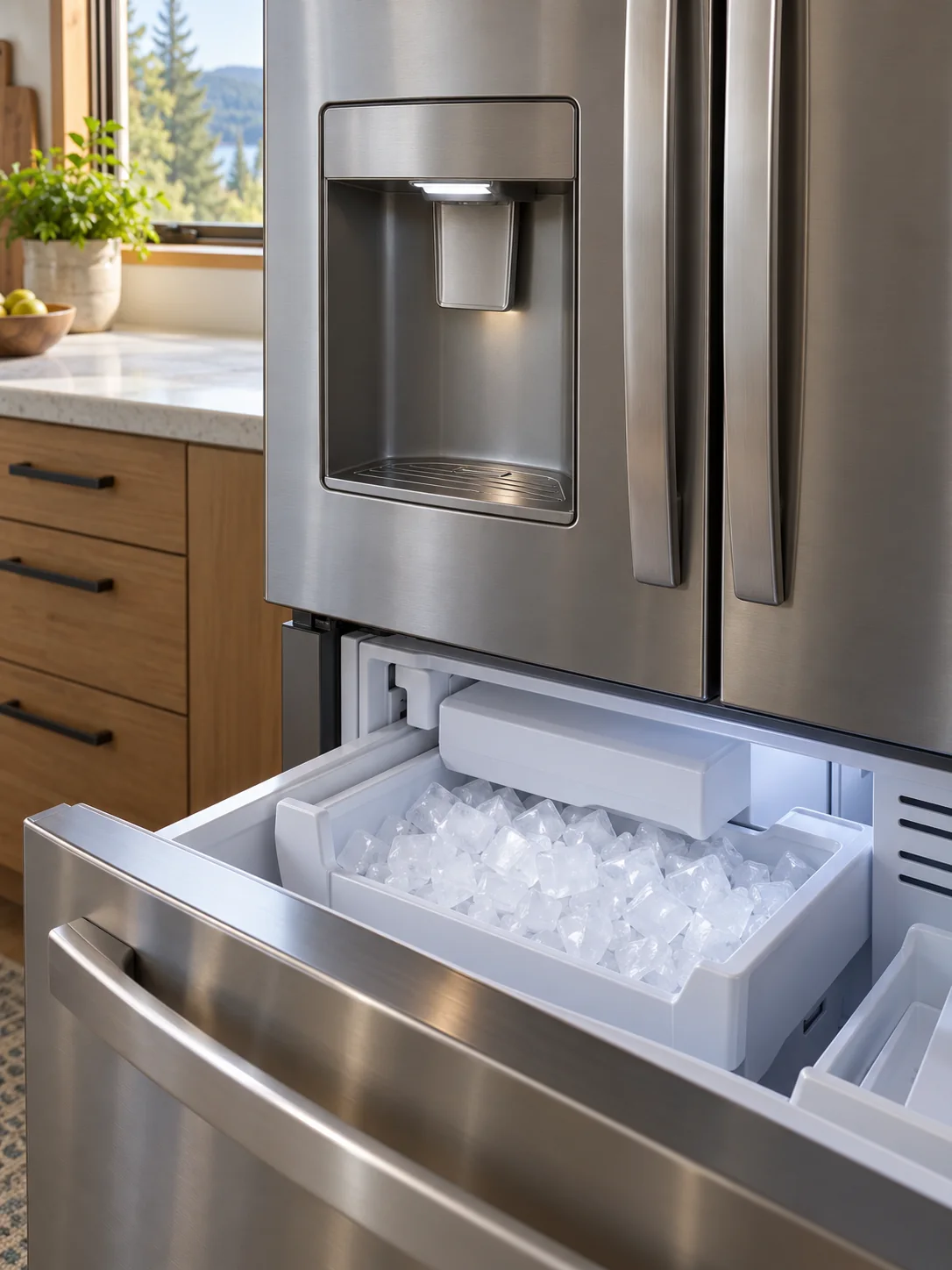
GE machines we take
From the harvest-gold GE range still cooking in a Ken Lake kitchen to the Cafe French door installed last year on West Bay Drive, GE has been in Olympia houses for sixty years.
Weekdays 7:30–5:30 · Saturday 9–1 · closed Sunday · Woodland Square Loop, at the Olympia–Lacey line
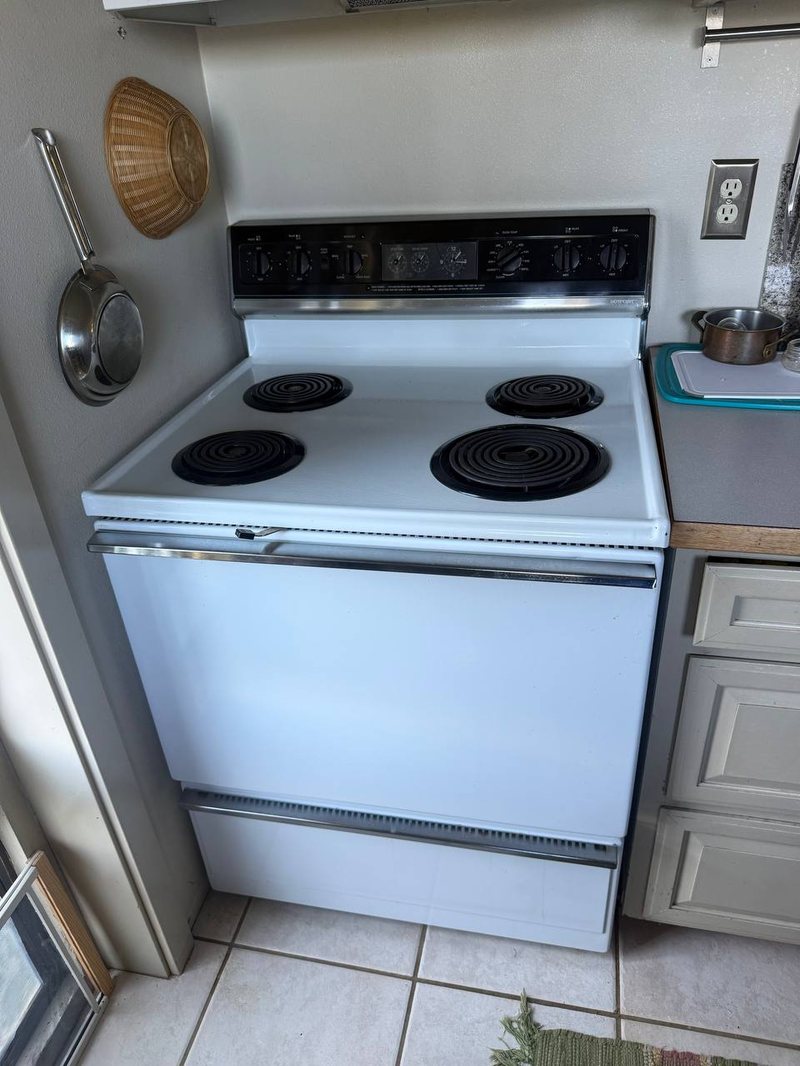
GE is the brand of the Olympia rambler. The 1960s and 70s houses around Capital Mall, Yauger Park and the Ken Lake loop were built with GE ranges and GE top-freezer refrigerators, and when those wore out the owners tended to buy GE again, so a west-side kitchen today might hold a Profile slide-in and a Cafe French door with a Keurig in the door. Every generation has its own way of quitting. The old ranges lose bake elements and infinite switches; the electronic ones throw F-codes for sensors and locks; the newer refrigerators lose dampers, dispenser boards and the occasional inverter. Knowing which is which before we arrive is most of the job.
Our base is in Lacey's Woodland District, just past the Olympia city line between Pacific Avenue and Sleater-Kinney Road, and we are a fully independent shop with no connection to GE or its parent. A diagnostic costs $99, and here is precisely what that buys: a technician with a meter at your appliance, the failed part identified by name, and a complete repair total written down before you decide. If you go forward, the $99 is treated as a portion of that total rather than a separate charge. If you stop, you owe $99 and nothing more. Refrigerators that have stopped cooling get a same-day visit provided the call lands before noon.
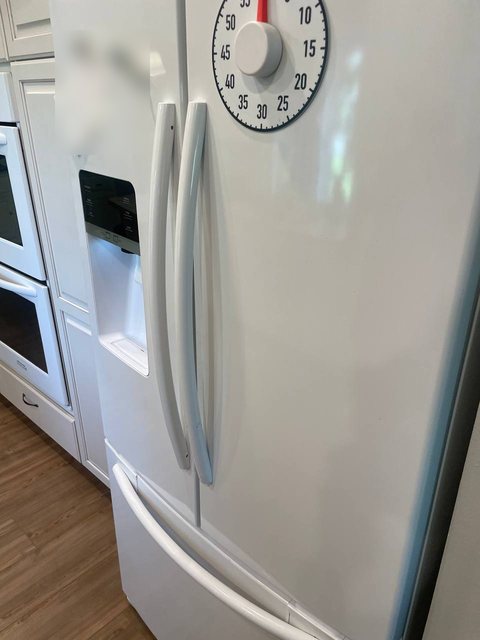
Milk going soft · freezer walls furring over · clicking from the back · puddle under the drawers
OPEN →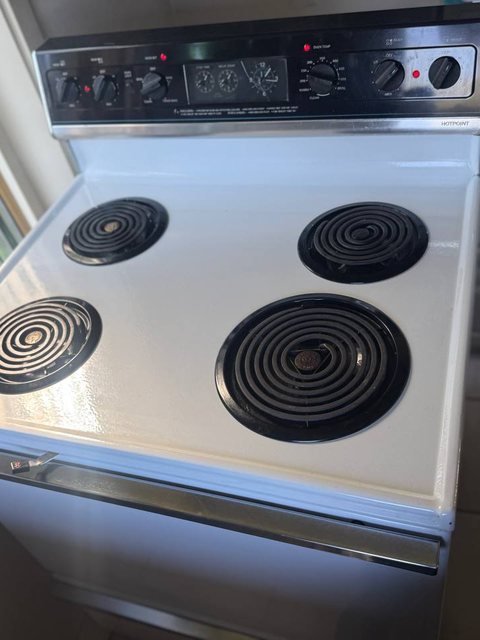
One burner dead · oven never gets hot enough · endless clicking · F-code showing
OPEN →| GE product | How it shows up | Behind it, usually | What the visit involves |
|---|---|---|---|
| Top-freezer refrigerator | Freezer frosty, fresh food warm, gurgle then silence from the back | Defrost timer or control stuck, or the defrost heater open, so the evaporator blocks with ice | Meter timer, heater and terminator, swap the bad one, melt the coil clear, verify airflow to the lower section |
| French-door refrigerator (Profile, Cafe) | Fresh food too warm while freezer is fine; sometimes a click from the divider | Damper stuck shut, or a damper motor that no longer answers the board | Replace damper assembly, test the thermistor feeding the board, confirm fan speed |
| Side-by-side with dispenser | No water or ice from the door, or the dispenser lights are dark | Dispenser control board, a frozen tube in the door, or a dual water valve with a dead coil | Meter the valve coils, thaw and insulate the door tube, replace the dispenser board where the touchpad tests dead |
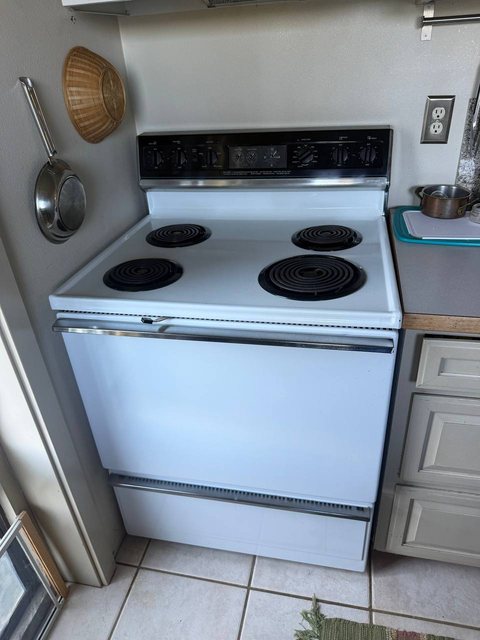
| Electric range, coil or radiant | One burner dead, or the oven takes forever to preheat | Burnt receptacle or infinite switch on the cooktop; bake element or oven sensor in the cavity | Replace the receptacle, switch or element, compare sensor resistance to spec, calibrate oven offset |
| Gas range | Oven clicks and does not light, or lights after a long delay | Tired igniter that glows but pulls too few amps to let the safety valve open | Measure igniter amperage, replace igniter, check burner flame color on propane installs |
| Wall oven or slide-in with lock | F9 or FD on the display, door will not unlock after cleaning | Door lock motor or switch out of position, occasionally a control relay | Test the lock switch and motor, replace the assembly, check the control output |
| Readout | Interpretation | How we handle it |
|---|---|---|
| F2 (oven) | The oven went past its intended temperature; usually a stuck relay on the control or a sensor that reads low, occasionally a shorted keypad | Meter the sensor at room temperature, check relay behavior, replace control or sensor as results dictate |
| F3 / F4 (oven) | Oven temperature sensor circuit reads open (F3) or shorted (F4); the sensor or its harness plug is the ordinary cause | Test sensor resistance, inspect the connector behind the rear panel, replace sensor if out of range |
| F7 (oven) | A key is registering as stuck or the keypad ribbon has a short; damp kitchens and spills are common triggers | Dry and reseat the ribbon, replace the touchpad or control if the fault returns |
| F9 / FD (oven) | The door lock circuit did not reach the expected position; typically a lock switch or motor, sometimes after a self-clean cycle | Cycle the lock, test the switches, replace the lock assembly |
| PF or FF (refrigerator) | PF notes a power failure; FF warns the freezer rose above safe temperature, which after a PSE outage may simply be history, or may mean cooling did not resume | Clear the alert, then confirm compressor and fans actually restarted before leaving |
Local water is a GE story too. GE refrigerators with door dispensers use a filter that clogs quickly on iron-heavy well water out on Steamboat Island and Delphi Road, and a slow dispenser is often a filter and a valve, not a pump. Inside city limits the water is groundwater with a bit of manganese, so GE dishwasher spray arms and range-hood filters darken faster than owners expect. On the range side, propane houses around Black Lake and Summit Lake bring us GE gas ovens with yellow-tipped flames and igniters that struggle in the damp of a January morning. We carry the igniters and the orifice kits and check the regulator setting while we are there.
The rest is how we run the business. Invoices are printed with a stated warranty period covering the component and our labor. Ordered parts come back on our schedule, and you are not billed for our second appearance. Second-home owners with a GE fridge in an Eld Inlet garage can approve over text and get their paperwork by email, and we discard gate or dock codes when the job wraps up. GE still covers sealed-system parts on some newer refrigerators, and because we are independent and gain nothing either way, we check the serial and tell you before a dollar is committed if the maker should be picking up the tab instead.
Probably not. F3 nearly always indicates an open temperature sensor circuit, and the sensor or its plug is the fix in most kitchens. We measure the sensor's resistance against the published value at room temperature, check the connector behind the oven's back panel and only look at the control if those test correctly.
On GE French-door and bottom-freezer models this pattern points to the damper between the two sections, or to a defrost problem that has iced the evaporator so air cannot move. We check both, and which one it is decides whether you need a damper assembly or a defrost part.
Usually. Bake and broil elements, infinite switches, burner receptacles and oven thermostats for those ranges are still made, and the machines are simple to work on. If a part truly is unobtainable we tell you at the diagnostic stage and you have spent $99, not a repair's worth.
All of them. Profile and Cafe units share most of their internals with the standard GE line but add dispenser boards, inverter compressors and more elaborate controls. We stock the common boards and thermistors and pull up the wiring diagram for your exact model number before the visit.
It may be. On certain newer GE refrigerators the sealed system is covered for longer than the rest of the appliance. Give us the model and serial when booking and we will check before we come out; if the compressor is covered, we point you to GE rather than invoice you for work they ought to absorb.
The price goes on paper before a screw comes out.
Ring or use the form; a phone photo of the display or the model sticker saves a step. We ring back with an arrival window and text again as the van pulls off Woodland Square Loop.
The technician tests the suspect part with instruments, tells you in plain words what gave out, and writes the repair down as a single price. Your $99 is already inside that number.
Fill valves, defrost heaters, igniters, drum rollers, drain pumps, relays — the things well water, salt air and PSE outages wear out on this shore of the inlet. If we have to order something, the second trip is ours to make, not yours to pay for.
You watch the machine finish a whole cycle, the kick panels and the floor go back the way they were, and the warranty term is typed onto the invoice.
Tell us over the phone. For $99 a technician tests the machine and writes the repair down as one price with that $99 folded in, and the invoice carries the warranty term in print.