Also on the truck · Eastside
The other five
$99 to diagnose, one written figure, printed coverage — the same for every machine we take in Eastside.
Eastside houses from Bigelow to Lions Park were built between the 1920s and the 1960s, and many run two refrigerators: the kitchen unit and an older one at the bottom of a narrow basement stair.
Weekdays 7:30–5:30 · Saturday 9–1 · closed Sunday · Woodland Square Loop, at the Olympia–Lacey line
$99 to diagnose, one written figure, printed coverage — the same for every machine we take in Eastside.
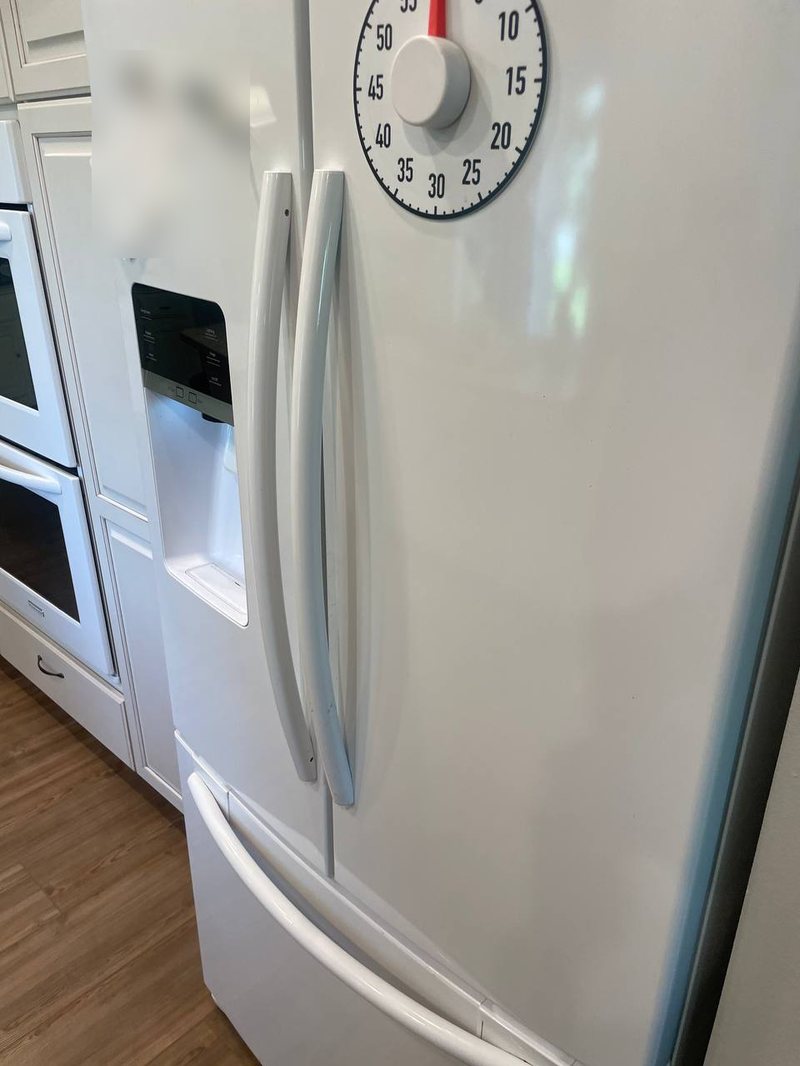
The Eastside refrigerator often shares a 15-amp circuit with the basement lights, sits on a floor that slopes toward the alley, and has never once had its coils cleaned because the kitchen was too tight to pull it out. Bungalows along San Francisco Ave and Puget St were framed for iceboxes, and a modern French-door unit fits about the way you would expect.
Then there is the second fridge downstairs, twenty years old, holding the overflow from the Farmers Market and a case of something cold. It fails quietly in a damp basement and nobody notices until the smell reaches the stairs. We repair both machines, carry a light for the dark corner, and watch our step on the stairs.
A solid sheet of frost across the freezer's rear wall tells us defrosting has stopped. Suspects are the heater, the defrost thermostat, and whichever timer or board schedules the cycle. We meter each one, melt the frost with a steamer rather than a screwdriver, and replace the piece that failed so the freezer stops choking on its own ice.
A refrigerator that never clicks off is either fighting a dirty condenser, a door that is not sealing, or a thermistor telling the control the box is warmer than it is. In an Eastside kitchen the condenser is usually the culprit, matted with dog hair and basement dust. We clean it, test the thermistor against a known temperature, and check the door before we blame anything expensive.
Older single-control refrigerators run the freezer off the fresh-food thermostat. When a Bigelow basement drops into the fifties in January, the compressor barely runs and the freezer thaws. Sometimes the fix is a garage-kit heater or a newer control; sometimes the honest answer is that the old fridge belongs upstairs. We test it and tell you which.
Compressor start-up draws several times the running current, and a 1950s circuit shared with a freezer and the furnace does not always tolerate it. We measure the start and run amps, check the relay and capacitor, and separate a weak compressor from a circuit that was overloaded before the fridge arrived. An electrician gets recommended when it is the wiring.
This upside-down pattern usually means the damper between compartments is stuck open or the air channel is blocked by a bag of peas shoved against the vent. We test the damper motor, clear the airflow path, and verify the thermistors. Overpacking is the cause often enough that we will show you where the cold air actually enters.
Condensation on the outside of a refrigerator points to a failed mullion heater, a gasket letting humid kitchen air in, or a drain pan that has overflowed onto an original wood floor. We find the moisture source, test the heater circuit, and replace the gasket if it has lost its grip. Old floors forgive very little water.
The visit is $99 flat. The technician meters the machine, points to the failed part in plain English, and writes one figure for the fix. Approve, and the $99 stops existing as a line of its own, because the figure already carries it. Decline, and your total for the visit is $99, period. A refrigerator still under the maker's coverage gets that mentioned before anything else happens.
Eastside owners include families who have been on the same block since the seventies, state employees working from a converted back bedroom, and landlords with a duplex near Lions Park. We take approval by text, email the invoice with the printed warranty term, and keep a garage or side-door code only until the job is finished. Hours run 7:30 to 5:30 Monday through Friday and 9 to 1 Saturday.
Sometimes. A relay, a fan, or a defrost heater on a well-built older unit is a sensible fix. A compressor on a thirty-year-old machine that also costs a fortune to run is usually not. The $99 diagnosis gives you the facts, and we will tell you straight if the money is better spent upstairs.
Either one, honestly, so we measure start-up amps and take stock of what else hangs on that circuit. Eastside houses often have one basement circuit carrying lights, a freezer, and a dehumidifier. If the compressor draws normally and the circuit is simply overloaded, we say so and suggest an electrician instead of a part.
Usually, with an appliance dolly, a strap, and the door removed. Bigelow and San Francisco Ave houses have some tight turns at the landing, and we will measure before promising. Most of our basement work is repair in place, though, so the fridge rarely has to move.
Because the defrost system has failed. Every modern refrigerator frosts a little and then melts it on a timer or a board's schedule. When the heater, thermostat, or control gives out, frost accumulates until airflow stops and the fresh-food side warms. We test each defrost component and replace only the one that quit.
Yes. The tenant gives us access, the owner texts back approval of the written figure, and the owner also receives the emailed invoice carrying the printed warranty term. We do not keep keys or codes past the close of the job, and we do not discuss the figure with anyone but the owner.
What each code usually points at, what is safe to check, and where to stop.
OPEN THE CODE SHEET →SY EF · SY CE · OPWhat each code usually points at, what is safe to check, and where to stop.
OPEN THE CODE SHEET →The price goes on paper before a screw comes out.
Ring or use the form; a phone photo of the display or the model sticker saves a step. We ring back with an arrival window and text again as the van pulls off Woodland Square Loop.
The technician tests the suspect part with instruments, tells you in plain words what gave out, and writes the repair down as a single price. Your $99 is already inside that number.
Fill valves, defrost heaters, igniters, drum rollers, drain pumps, relays — the things well water, salt air and PSE outages wear out on this shore of the inlet. If we have to order something, the second trip is ours to make, not yours to pay for.
You watch the machine finish a whole cycle, the kick panels and the floor go back the way they were, and the warranty term is typed onto the invoice.
Tell us over the phone. For $99 a technician tests the machine and writes the repair down as one price with that $99 folded in, and the invoice carries the warranty term in print.