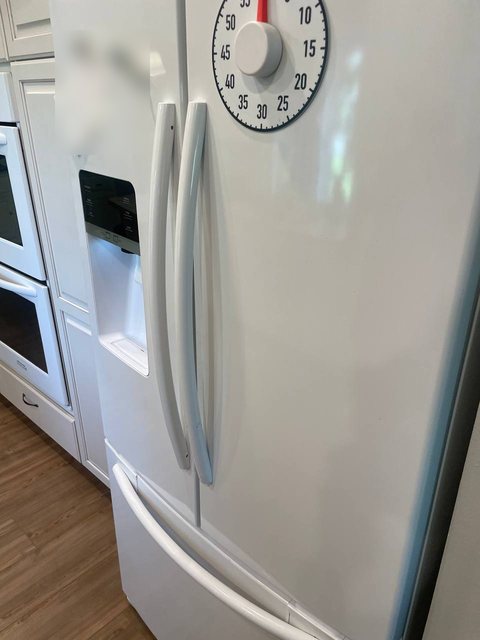
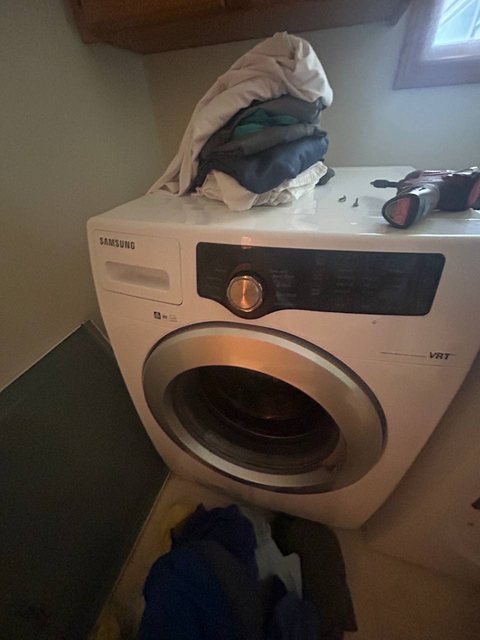
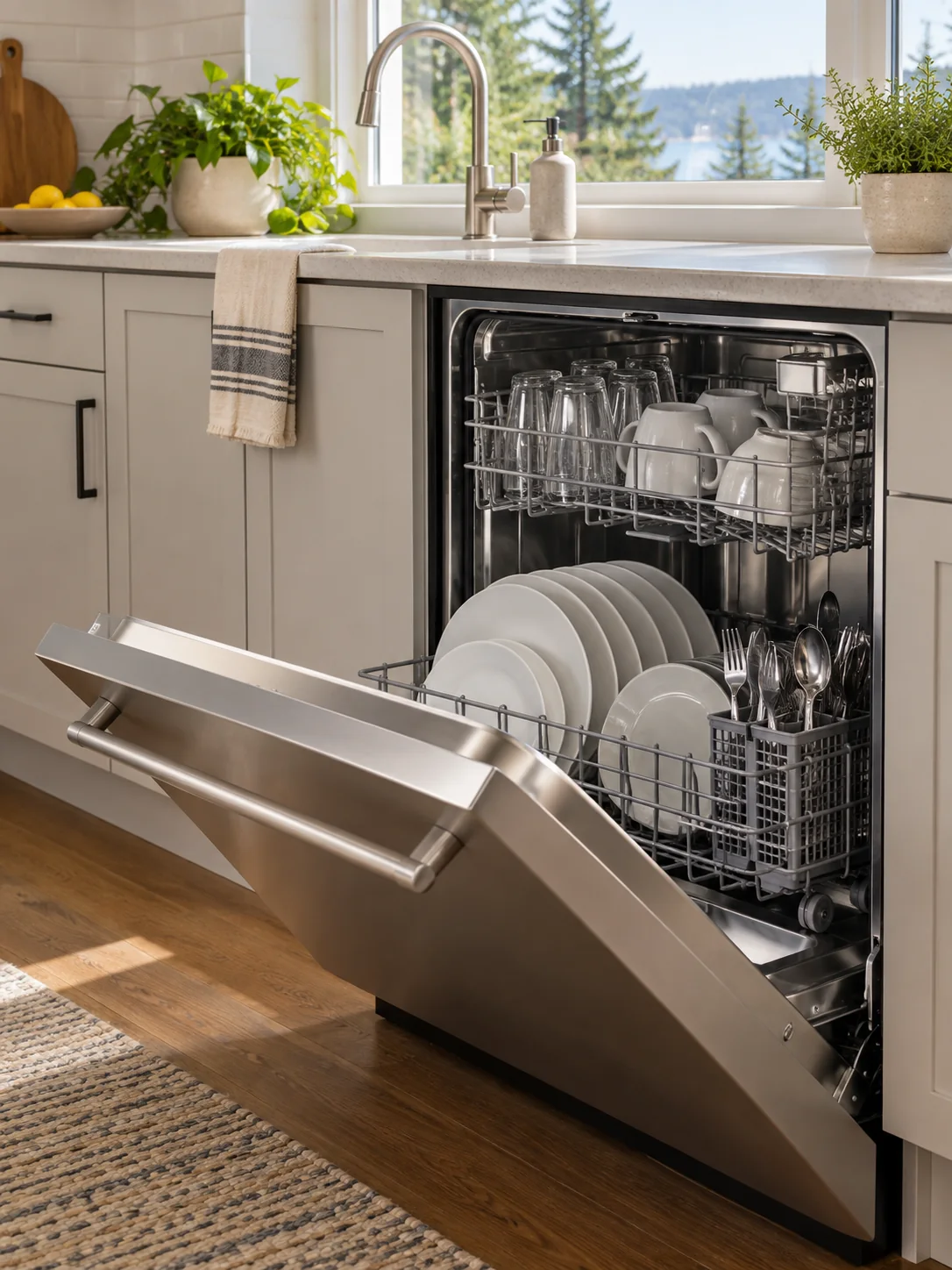
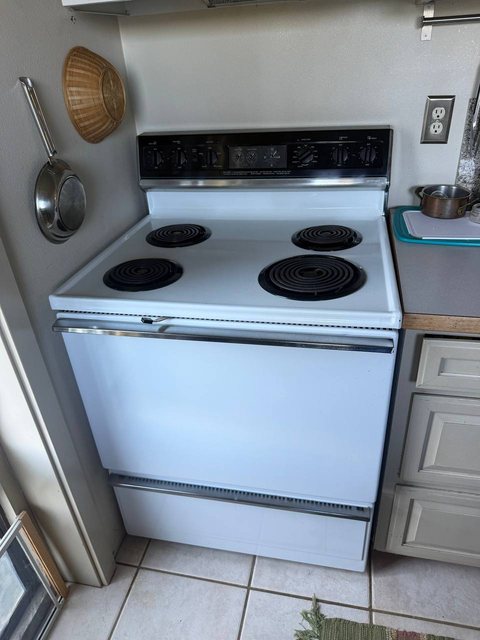
Also on the truck · Eastside
The other five
$99 to diagnose, one written figure, printed coverage — the same for every machine we take in Eastside.
Eastside basements vent their dryers through whatever opening the 1950s left them: a window well, a hole in the rim joist, a run under the back porch.
Weekdays 7:30–5:30 · Saturday 9–1 · closed Sunday · Woodland Square Loop, at the Olympia–Lacey line
$99 to diagnose, one written figure, printed coverage — the same for every machine we take in Eastside.
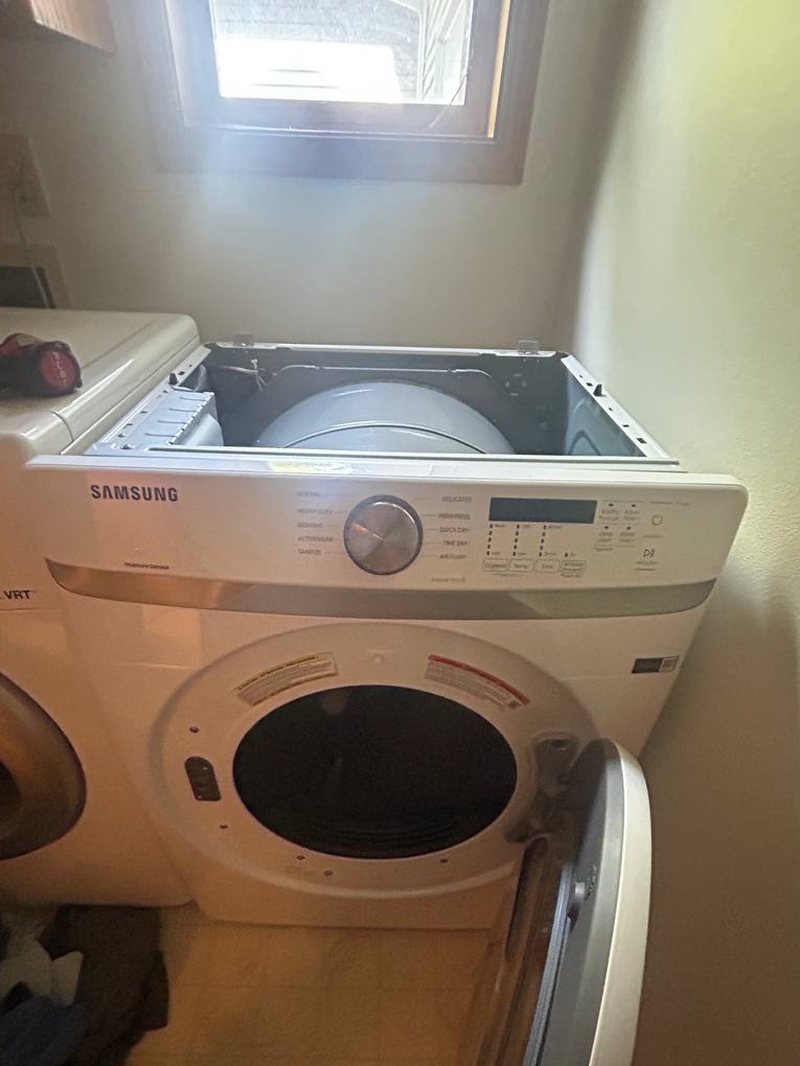
A dryer in a Puget St basement fights the house as much as the laundry. The vent runs uphill to a window well and collects lint at the bend. The circuit was added in 1962 and the breaker has grown tired. The basement is damp from October to May, so the dryer breathes wet air and works harder to do the same job. Gas dryers on PSE lines add an igniter and a flame sensor to the list of things that can quit.
We repair dryers in these conditions every week. The technician brings a meter, a gauge for vent pressure, and a manometer for gas, and tests the dryer where it stands.
The flame catches, then drops out once the drum has turned a few times. On most gas dryers that is a flame sensor or a pair of gas valve coils that open when cold and fail when warm. We watch the burner through a full heat cycle, meter both coils along with the sensor, then replace the pair that quit rather than guessing at one.
Window-well vents are short, so they seem harmless, but the hood sits below grade where leaves and lint pile up, and the moist exhaust curls back into the basement. We measure back-pressure, clear the hood and duct, replace crushed foil with rigid pipe where we can, and tell you when the run itself needs rethinking.
An electric dryer that tumbles but barely warms often is running on only one of its two 240-volt legs. A fuse in an old panel, a burned terminal block, or a cord end that overheated at the outlet can all cause it. We meter the outlet, inspect the terminal block, and replace the cord or block. A tired panel gets referred to an electrician.
Damp basement air enters the dryer and the moisture sensor sees wet clothes long after they are dry. The sensor bars get wiped clean, the vent gets checked for leaks that dump humid air back into the room, and the cycling thermostat gets tested. Sometimes the best fix is a dehumidifier next to the machine rather than a part, and we will say so.
Older dryers run for decades on a rubber belt that finally lets go, leaving a motor that hums and a drum that will not budge. We replace the belt and idler pulley together, check the drum rollers and glides while the cabinet is open, and confirm the motor still starts cleanly. It is a sensible repair on a well-made old machine.
A dryer that smells like scorched lint has lint inside the cabinet, near the heater or burner, and a thermal fuse or high-limit thermostat that is about to trip or already has. We open the cabinet, clean it out completely, test the safety thermostats and fuse, and trace the airflow problem that let lint bypass the filter in the first place.
For $99 we test the dryer with a meter, identify the failed component in plain language, and put a single repair figure in writing. Go ahead and the $99 rides inside that figure; hold off and $99 covers the visit. That figure is the same whether you are on East Bay Dr or out past Lions Park, and there is no mileage line, since the shop is the next neighborhood over, just across the Lacey line.
Owners of Eastside rentals get approval requests by text and invoices by email with the printed warranty term. A side-door or garage code stays with us only until the job closes. If your dryer is new enough that the manufacturer's coverage still applies, we tell you before ordering anything. Hours are 7:30 to 5:30 weekdays plus Saturday until 1.
No. Turn it off and unplug it or close the gas valve. Lint inside the cabinet near the heat source is how dryer fires start, and the safety thermostats are the last line of defense. We clean the cabinet, test every safety, and fix the airflow problem so it does not recur.
In most cases the gas valve coils, which open the valve when cold and fail once they warm up, or the flame sensor. Both are ordinary parts. We watch the burner through a cycle to confirm before replacing anything, because a clogged vent can produce a similar on-and-off heat pattern.
Yes, within reach of the machine. Crushed foil duct is the most common airflow restriction we see in Eastside basements, and rigid or semi-rigid pipe from the dryer to the wall solves it. Rerouting the whole run, through the joist or up a window well, is a bigger job we will describe honestly.
It can, as long as the fuses and the receptacle are sound. Half-heat and no-heat calls on the Eastside often trace to a blown fuse or a burned receptacle rather than the dryer. We test at the outlet first. A panel that needs replacing is an electrician's job and we say so.
Regularly. Access comes from the tenant, the approval comes from the owner by text, and the emailed invoice, printed warranty term included, goes to the owner. We keep no keys, and any door code is removed from our records once the work is complete.
The price goes on paper before a screw comes out.
Ring or use the form; a phone photo of the display or the model sticker saves a step. We ring back with an arrival window and text again as the van pulls off Woodland Square Loop.
The technician tests the suspect part with instruments, tells you in plain words what gave out, and writes the repair down as a single price. Your $99 is already inside that number.
Fill valves, defrost heaters, igniters, drum rollers, drain pumps, relays — the things well water, salt air and PSE outages wear out on this shore of the inlet. If we have to order something, the second trip is ours to make, not yours to pay for.
You watch the machine finish a whole cycle, the kick panels and the floor go back the way they were, and the warranty term is typed onto the invoice.
Tell us over the phone. For $99 a technician tests the machine and writes the repair down as one price with that $99 folded in, and the invoice carries the warranty term in print.