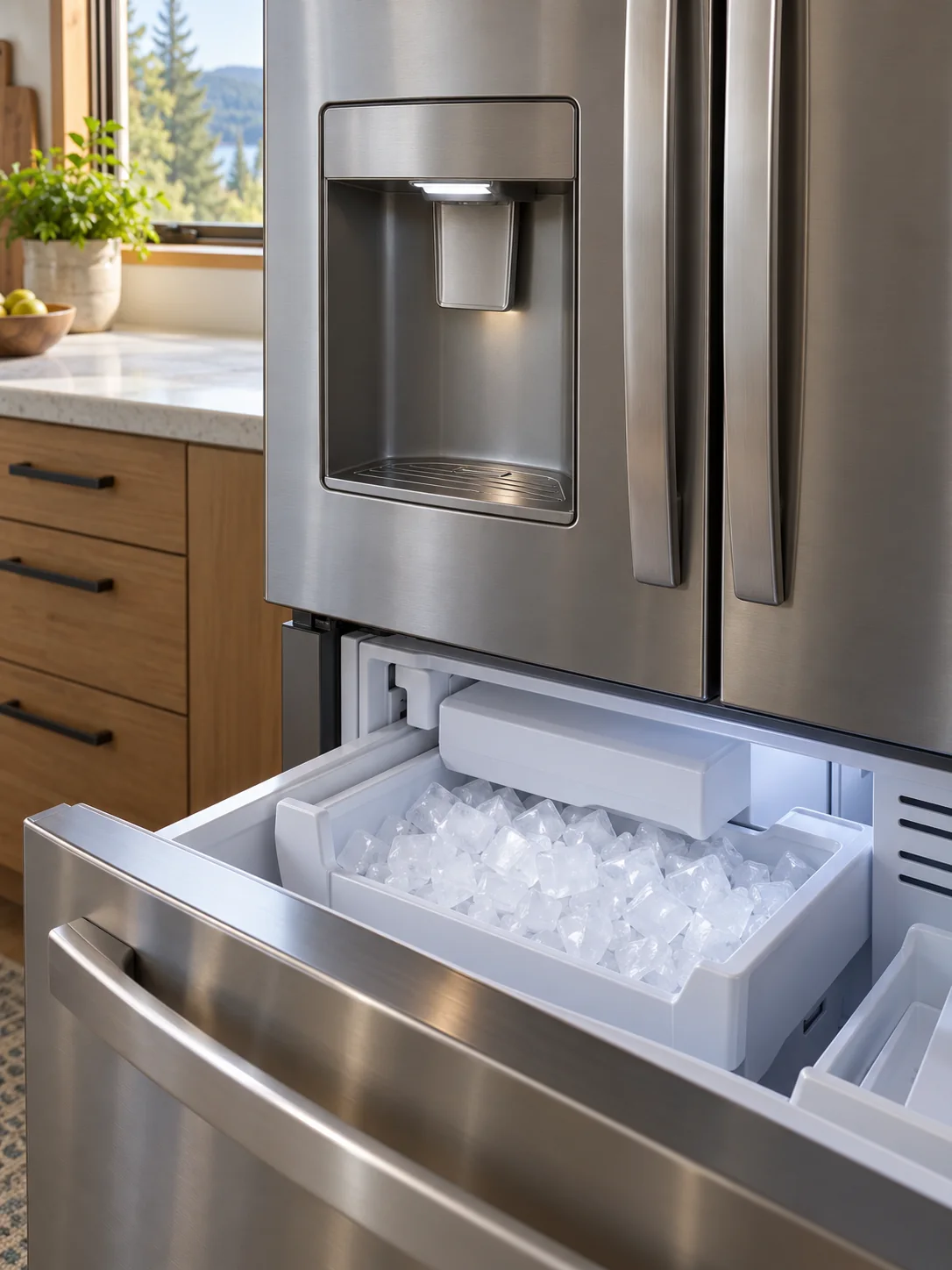
GE refrigerators of the last twenty years hang almost everything off one main board behind the back panel, and when that board drops a relay the whole machine misbehaves at once.
Weekdays 7:30–5:30 · Saturday 9–1 · closed Sunday · Woodland Square Loop, at the Olympia–Lacey line
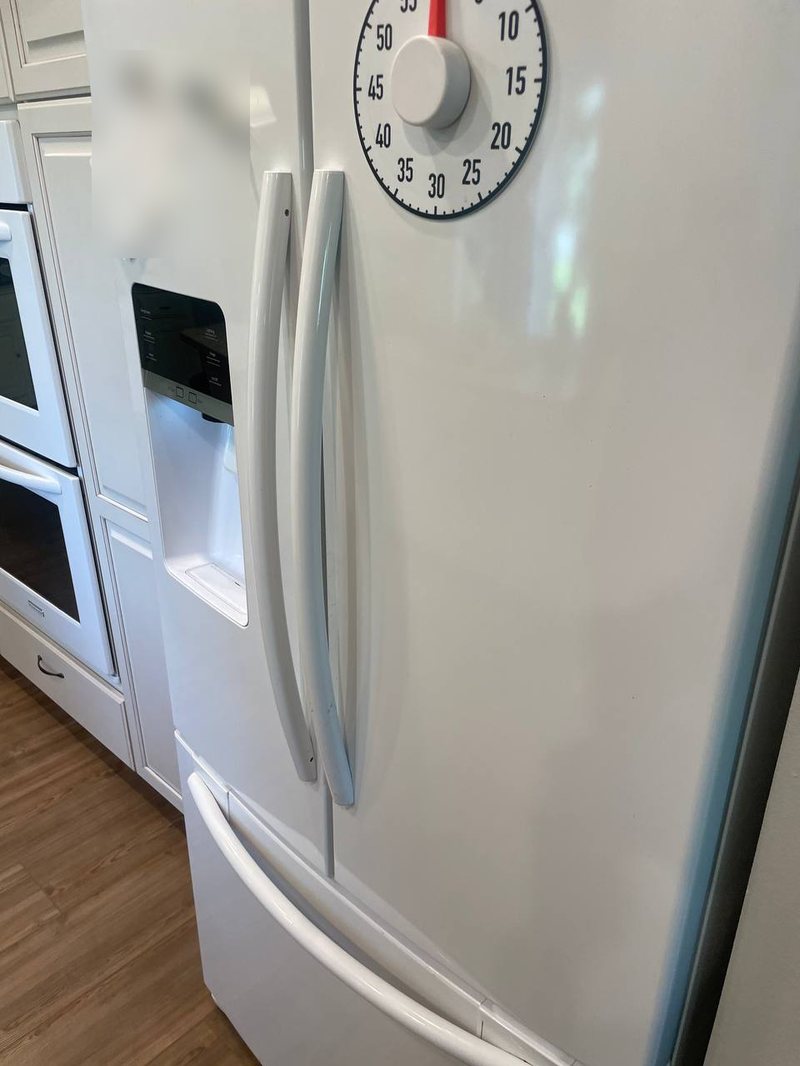
There are two kinds of GE refrigerator in Olympia. One is the Profile or Cafe French door in a remodeled kitchen off Cooper Point Road, with a dispenser, a dual evaporator and a board that manages all of it. The other is the twenty-year-old top freezer that moved to the garage or basement when the kitchen was redone and now keeps the overflow cold in a South Capitol house. Both break in GE-specific ways, and both are usually worth repairing.
On the newer machines the main control board is the part that draws the most suspicion, sometimes fairly. It runs the compressor through an inverter, commands the defrost heater and reads the thermistors. We meter what it is doing before we blame it, because a board that is starved by a failed thermistor is innocent.
Compressor silent, fans off, lights on, or the whole cabinet cycling on and off at odd intervals. GE's main board fails at its relays and inverter drive, and heat behind the fridge or a winter surge hurries that along. We check that the board receives proper supply and sensor inputs, verify compressor and fans run when driven directly, and replace the board only when it has genuinely failed.
Pull the freezer back panel and the coil is a white brick. On GE this means defrost has not run: the heater is open, the defrost thermostat has failed, the thermistor is lying, or the board is not commanding it. We thaw the coil, meter every part of the defrost circuit, swap the culprit, and confirm a defrost cycle actually completes before calling it done.
The spare fridge in a Cooper Point garage or Wildwood basement stopped over the winter. A cold garage fools the thermostat into rarely asking for cooling, and the freezer softens while the fridge section is fine. Older GE top-freezers also lose their start relay and overload. We test the start components and say whether you have a real fault or a placement problem, and what a garage kit would do.
GE puts ice makers in the freezer, in the fresh-food door, and behind the left French door depending on the model, and each has its own habits. Common causes are a fill valve narrowed by the iron in well water beyond the city line, an iced fill tube, a dead mold heater, or a module that never cycles. We test water flow, heater and motor before replacing the assembly.
On GE bottom-freezer and French-door models the air damper between freezer and fresh food sticks open or shut. Stuck open, lettuce freezes on the top shelf; stuck shut, milk spoils while the freezer is fine. We test the damper motor and the thermistor that controls it, clear the ice that often jams the door, and replace the damper assembly when its motor has quit.
The paddle does nothing, water dribbles for a minute after you let go, or the first glass comes out warm. The dispenser board, the door switch, the water valve and a saturated water filter each produce one of these. On a GE Profile side-by-side we test them in that order, replace the filter if the flow test demands it, and fit the valve or board that has actually failed.
| Code | What it usually means | What we do |
|---|---|---|
| PF | Power failure indicator: the refrigerator lost supply and temperatures may have drifted. | Clear it, confirm the compressor restarted, and check for a tripped GFCI or start relay if it recurs. |
| FF | In most cases a temperature warning: the freezer or fresh-food compartment ran too warm for too long. | Check door seals, evaporator frost, fans and defrost before assuming the compressor is at fault. |
| tC | Not a fault. Turbo Cool mode is running the fresh-food side colder for a few hours. | Explain the mode and turn it off if it was pressed by accident; no repair needed. |
| tF | Not a fault. Turbo Freeze mode is holding the freezer colder for a set time. | Confirm it clears on its own, and check the freezer thermistor if the display keeps returning to it. |
Our GE refrigerator diagnostic is $99: technician and meter at the refrigerator, an unvarnished account of what broke, and a fixed repair figure written down before anything is ordered. Have us fix it and the $99 is counted as part of that figure. Decline and $99 is the entire cost of our having come. Inside our Olympia circle, drawn from the shop at the Olympia–Lacey line, nobody pays for the drive, and if GE's own coverage still reaches your model we point that out first.
A warm refrigerator is our same-day priority on weekday calls that reach us before noon; Saturday runs 9 to 1. GE boards and defrost parts usually ride along on the first visit; anything ordered returns on a trip we schedule, unbilled. The printed warranty term is on your invoice; second-home owners on the inlets approve by text and get it emailed.
No, and that assumption has cost a lot of owners money. A board that receives bad input from a failed thermistor or a shorted defrost heater looks guilty and is not. We meter the inputs and the outputs and drive the loads directly. When the board has truly failed, and they do, we replace it, but only after the test says so.
Usually one of three things: the compressor start relay or overload failed on restart, the main board lost a relay to the surge, or the outlet's GFCI tripped and stayed open. The last one costs you only the diagnostic. We check supply first, then the start components, then the board, in that order.
Frost on the back wall or the coil behind it means defrost is not completing. On GE the heater, the bimetal thermostat and the board that times the cycle are the three suspects, and a gasket leaking humid air makes all of them work harder. We identify which one failed rather than replacing all three.
Frequently, yes. Older GE top-freezers and side-by-side models are simple, parts remain available for most, and the repairs are modest. When the compressor itself is gone on a machine that age, we will say the money is better spent elsewhere. Otherwise a start relay, a defrost timer or a fan motor keeps them going for years.
PF means the refrigerator lost power at some point and is warning you to check food temperatures. FF in most cases means the freezer or fresh-food temperature rose above the safe range for longer than the control likes, often after an outage or a door left ajar. Either clears once temperatures recover; if FF returns without a reason, something is failing.
All GE machines → · GE range repair → · Refrigerator & Freezer Repair in Olympia →
The price goes on paper before a screw comes out.
Ring or use the form; a phone photo of the display or the model sticker saves a step. We ring back with an arrival window and text again as the van pulls off Woodland Square Loop.
The technician tests the suspect part with instruments, tells you in plain words what gave out, and writes the repair down as a single price. Your $99 is already inside that number.
Fill valves, defrost heaters, igniters, drum rollers, drain pumps, relays — the things well water, salt air and PSE outages wear out on this shore of the inlet. If we have to order something, the second trip is ours to make, not yours to pay for.
You watch the machine finish a whole cycle, the kick panels and the floor go back the way they were, and the warranty term is typed onto the invoice.
Tell us over the phone. For $99 a technician tests the machine and writes the repair down as one price with that $99 folded in, and the invoice carries the warranty term in print.