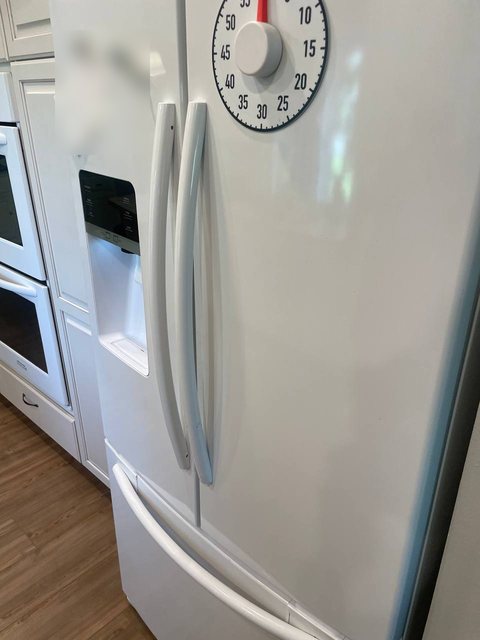
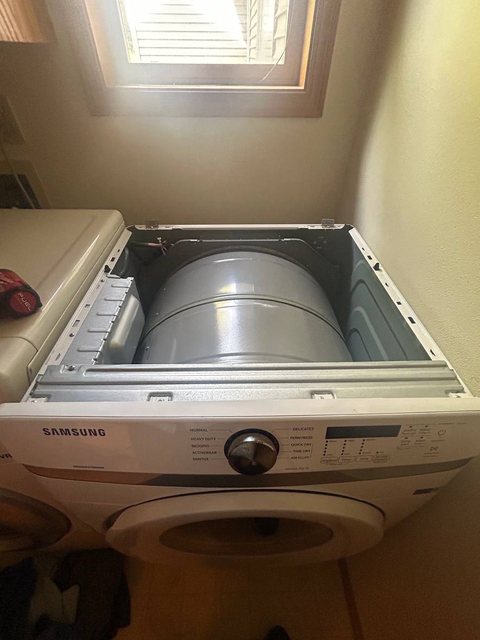
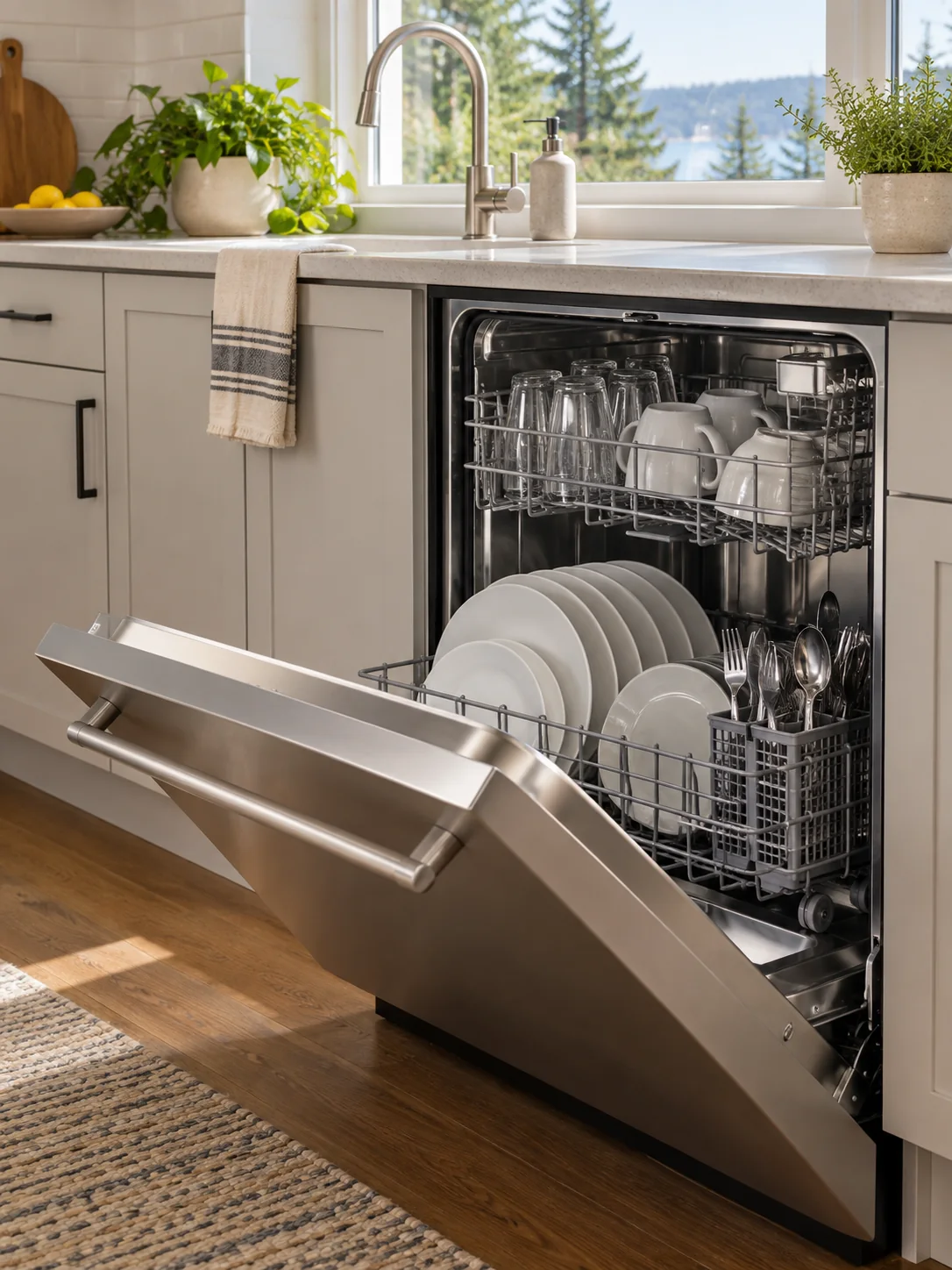
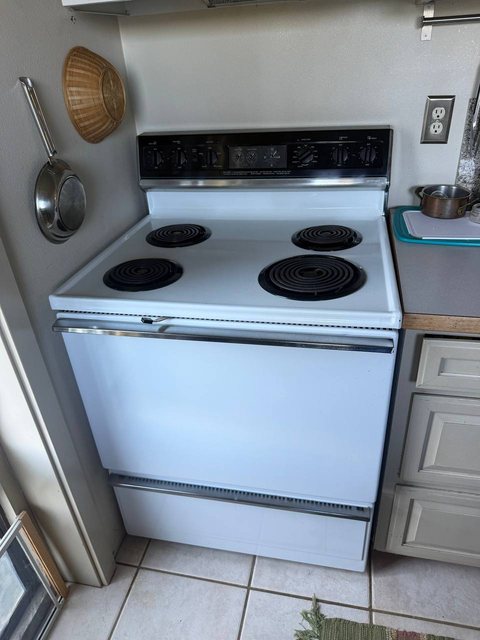
Also on the truck · West Olympia
The other five
$99 to diagnose, one written figure, printed coverage — the same for every machine we take in West Olympia.
Between Harrison Avenue and Yauger Park sit thousands of laundry rooms tucked into 1960s ramblers, split-level garages and apartment closets, and they send us more washer calls than any other part of town, so the van comes over US-101 for them nearly every day.
Weekdays 7:30–5:30 · Saturday 9–1 · closed Sunday · Woodland Square Loop, at the Olympia–Lacey line
$99 to diagnose, one written figure, printed coverage — the same for every machine we take in West Olympia.
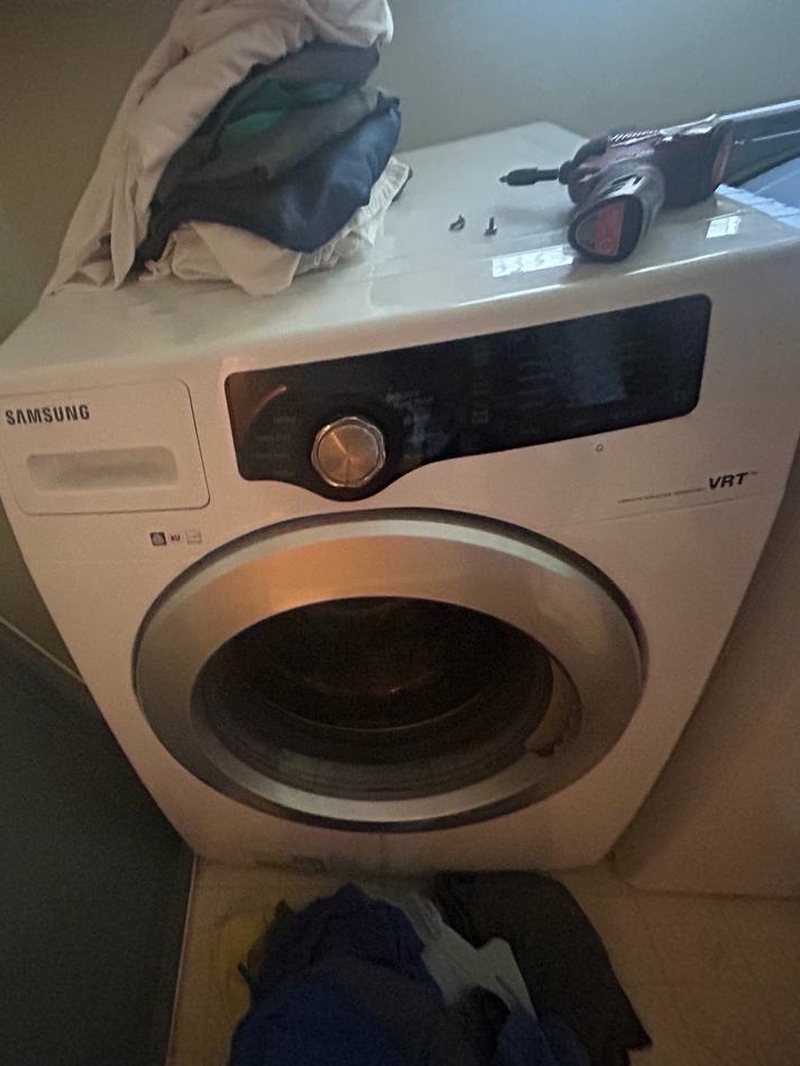
West Olympia laundry rooms follow the houses. In the ramblers off Division Street the washer usually sits in a hallway closet or an unheated garage, on concrete that was poured a little off level. In the split-levels near Yauger Park it is on the lower floor, sharing a wall with the family room, which is why a walking spin cycle gets noticed fast. In the apartment complexes off Cooper Point Road, it is a stacked pair wedged in a closet, untouched for a decade.
The water is city water here, drawn from wellfields and springs and moderately hard, and the drains run to LOTT sewer, so the well-and-septic concerns we deal with on the peninsula mostly disappear. What replaces them is age, tight spaces and heavy use.
Front-loaders in apartments and townhomes near the mall get run hard, and the door lock assembly is the first casualty. The machine finishes, the lights go dark, and the door will not release. Sometimes the lock has jammed mechanically; often the control cannot confirm the drum has stopped or drained. We release the door, check the lock assembly and drain path, and replace what is worn.
Wet October through May and a laundry closet with no airflow grow mold in a front-loader's rubber boot, and eventually it lifts off the tub and weeps. Cleaning helps early; once the rubber is black and pitted, only a new boot fixes it. We change the boot, check the drain pump for sludge, and suggest a door-open habit and a monthly hot cycle to keep the next one clean.
A washer that bangs and shuffles on a split-level lower floor is usually out of balance for a mechanical reason, not just a bunched-up comforter. Top-loaders wear out their suspension rods; front-loaders lose their shock absorbers. Both let the drum swing wide at speed. We fit a new suspension set, set the feet level, and confirm the spin runs steady with a real load.
When a west-side washer finishes with water lingering in the bottom, the pump is either blocked by debris or has lost its impeller. Apartment machines collect hairpins, coins and toothpicks in the pump housing. We open the housing, clear it, test the motor windings, and check the drain hose and standpipe connection to the LOTT line for a partial blockage.
Electronic washers in 1990s ramblers often share a circuit with the garage, and a PSE outage followed by a hard restart can leave the control board confused or burned. Dead panels, random flashing and a cycle that will not advance point to the board or its power supply. We test incoming power and the board's outputs before ordering anything, so the part you pay for is the part that failed.
Top-loaders from the 1990s and 2000s are still common in west-side ramblers, and their inlet valves clog with scale from the city's moderately hard water. One side of the valve sticks, so the machine fills cold only or takes ages to fill at all. We replace the dual valve, clean the screens, and inspect the hoses, which on a machine this age are often overdue for replacement.
The diagnostic visit is $99. A technician arrives, finds the actual fault with a meter rather than a hunch, and writes down a single figure for the complete repair. Choose to proceed and that $99 is treated as a deposit already made toward the figure. If you would rather replace the washer, $99 is your only cost, and you will leave the conversation knowing exactly what was wrong so you can shop with confidence.
We print the warranty term on every invoice, covering the part and our labor. Anything ordered rides back out with us, and that second trip costs nothing extra. Landlords and managers with washers in units near Capital Mall or Evergreen text us a yes and read the invoice in their email while the tenant simply lets us in.
Yes, and they make up a big slice of our west-side work. Stacked and combination units in the complexes off Cooper Point Road and behind Capital Mall need a careful pull from the closet and sometimes an unstacking to reach the washer. We handle both, coordinate with the property manager for access, and put everything back exactly as it was.
Front-loaders in closets with little airflow hold moisture in the boot and the drain pump housing, and a wipe of the visible rubber does not reach the sludge underneath. If the smell survives a hot cycle with a washer cleaner, the boot has likely gone porous and the pump housing needs clearing, both of which we can take care of.
West Olympia addresses get batched together because so many of them come in, and the van heads across the bridge for them most days. For a washer, that generally means an appointment inside the same week, often sooner. Tell us the brand, what the machine is doing, and whether it is in a closet or a garage so we bring the right parts on the first trip.
A 1990s top-loader with a mechanical timer is often worth a valve, belt or lid switch, because those repairs are modest and the machine can run another decade. A transmission or motor failure changes the arithmetic. We will give you a plain answer once we have seen it, and we never push work that does not add up.
Yes. Managers handling units along Harrison Avenue and Cooper Point Road text back a yes on the written figure, and the invoice reaches their inbox. The tenant provides access or we use a lockbox code that we delete when the job closes. Nothing about payment or approval ever lands on the tenant.
What each code usually points at, what is safe to check, and where to stop.
OPEN THE CODE SHEET →F5E2 · F8E1 · F9E1What each code usually points at, what is safe to check, and where to stop.
OPEN THE CODE SHEET →The price goes on paper before a screw comes out.
Ring or use the form; a phone photo of the display or the model sticker saves a step. We ring back with an arrival window and text again as the van pulls off Woodland Square Loop.
The technician tests the suspect part with instruments, tells you in plain words what gave out, and writes the repair down as a single price. Your $99 is already inside that number.
Fill valves, defrost heaters, igniters, drum rollers, drain pumps, relays — the things well water, salt air and PSE outages wear out on this shore of the inlet. If we have to order something, the second trip is ours to make, not yours to pay for.
You watch the machine finish a whole cycle, the kick panels and the floor go back the way they were, and the warranty term is typed onto the invoice.
Tell us over the phone. For $99 a technician tests the machine and writes the repair down as one price with that $99 folded in, and the invoice carries the warranty term in print.