Also on the truck · West Olympia
The other five
$99 to diagnose, one written figure, printed coverage — the same for every machine we take in West Olympia.
West Olympia sends us more refrigerator calls than any other neighborhood, so a box that quit overnight in a rambler off Division Street or an apartment behind Capital Mall is a route the van already knows across the 4th Avenue bridge.
Weekdays 7:30–5:30 · Saturday 9–1 · closed Sunday · Woodland Square Loop, at the Olympia–Lacey line
$99 to diagnose, one written figure, printed coverage — the same for every machine we take in West Olympia.
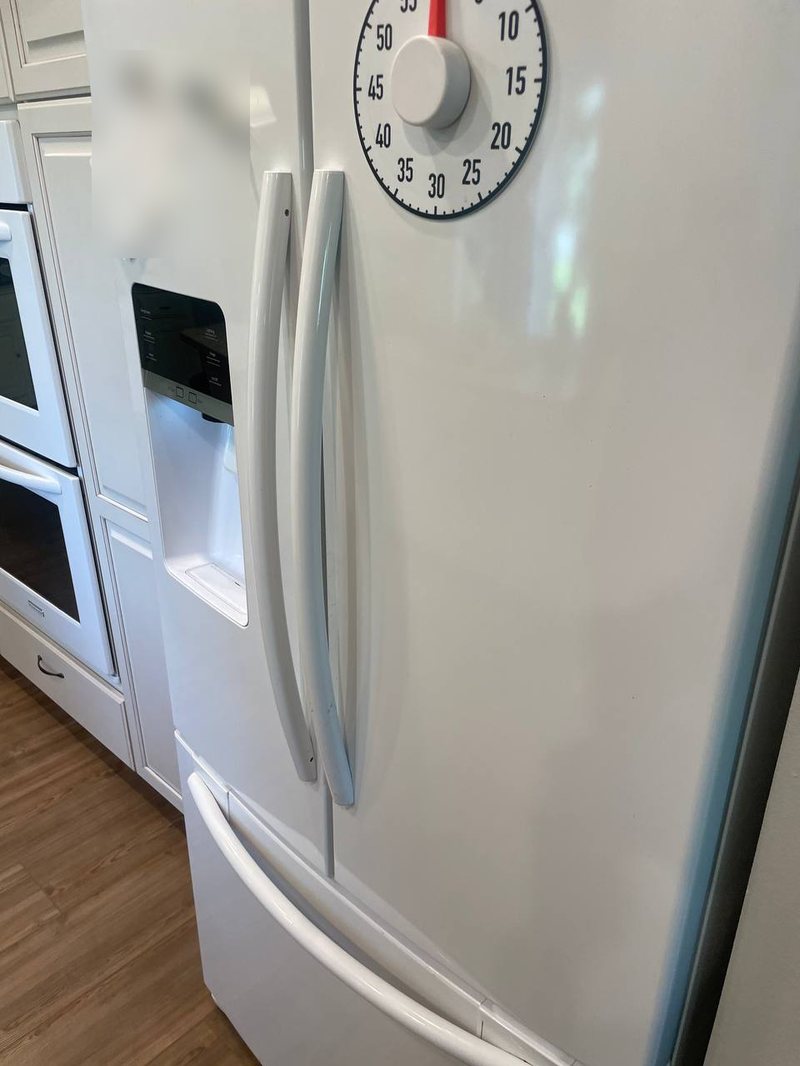
West Olympia was built out in a burst between the 1960s and the 1990s, and the kitchens show it: ramblers and split-levels off Division Street and around Yauger Park with a refrigerator alcove sized for a narrower box than the one living there now. Squeezed against cabinetry, those refrigerators run warm, their condenser coils choke on dust, and their gaskets rub the trim every time someone reaches for the milk.
Add the apartments and townhomes behind Capital Mall, where a property manager is fielding a tenant's complaint from an office across town, and the rentals along Cooper Point Road full of Evergreen students, and you have a neighborhood that can fill a whole day of the van's schedule inside the 98502 ZIP. Each visit opens with a temperature reading and a meter.
Refrigerators shoehorned into a 1970s rambler alcove get their gaskets caught on the counter edge until the seal splits or hardens. Warm air leaks in along the hinge side, the compressor runs longer, and frost gathers on the freezer wall. We replace the gasket with the correct profile and reset the hinge so the door swings shut under its own weight.
When the back of the freezer turns into one thick sheet of ice, the defrost cycle has quit. The heater, the bimetal thermostat or the control that schedules them has failed, and weeks of buildup smother the evaporator until the fresh-food side warms. We melt it out, test each defrost component on its own, and replace only the one that reads open.
City water on the west side comes from the McAllister Wellfield and Allison Springs, and it carries enough manganese and hardness to load a filter well before the reminder light says so. A choked filter starves the dispenser and the ice tray alike. When a new filter brings no improvement, the inlet valve screen or a kinked line under the cabinet is next on the list, and we bring both.
A box that runs and runs yet never drops below fifty degrees is usually starved of airflow. In a split-level kitchen with the refrigerator jammed against a wall, the condenser coil mats with lint and pet hair, and the fan cannot carry heat away. We pull the unit, clean the coil, test fan speed and compressor amperage, and spell out whether cleaning alone will do or a component is failing.
Refrigerators from the last fifteen years hand temperature control to a board and a few thermistors. When a thermistor drifts, the board believes the box is cold and shuts the compressor off early, or runs it without pause. We read thermistor resistance against the maker's chart, check board outputs with a meter, and replace whichever piece is wrong. Rentals near the mall see this often.
A refrigerator that hums for a few seconds and then clicks silent is trying to start and failing. On most models the start relay or overload protector has died, a small part. On a few, the compressor itself has locked up. An amp clamp on the line separates the two cases almost immediately, and a locked compressor in an aging box earns an honest recommendation to shop instead.
Our diagnostic fee is $99, and it is the only number we quote before a technician has put hands on the refrigerator. Once the fault is pinned down, a single written figure covers the finished repair. Say yes and the $99 you have already paid counts as the first part of that figure, so no separate service-call line is added. Decline, and your cost is $99 and nothing further, plus a straight opinion about replacing the unit.
A printed warranty term for parts and labor appears on the invoice. Should a component need ordering, the return visit is timed around your day and carries no charge of its own. For west-side refrigerators inside rentals and apartments, we deal directly with the manager or owner: approval by text, invoice by email, lockbox code kept only for the length of the job.
Ring before noon Monday through Friday or on Saturday morning and the answer is yes. A refrigerator that has stopped cooling outranks every other job we have that day, and the van takes US-101 across the inlet with the defrost parts already loaded. Keep the doors closed and leave the unit powered so we can watch the compressor try to run, which shortens the diagnosis considerably.
Yes. Olympia's supply is groundwater with moderate hardness and some manganese, and it loads a refrigerator filter faster than the six-month reminder implies. Slow dispensing, small cubes and a gray tint in the ice are the usual signs. Change the filter first; if the flow does not recover, the inlet valve or a narrowed line is likely and we can fix either.
Landlords and property managers around the mall and along Cooper Point Road use us regularly. You approve the repair figure by text, the tenant lets us in or we use a lockbox code that is deleted when the job closes, and the invoice lands in your email. The tenant is never asked to approve or pay anything.
Usually. Those boxes were built with generous compressors and simple controls, and the parts that fail on them, such as fans, defrost heaters, relays and gaskets, are inexpensive and available. We would only steer you toward replacement for a refrigerant leak, a seized compressor, or a cabinet whose insulation has broken down so that it sweats constantly.
We repair rather than install, but during a repair we will tell you whether the alcove is cooking the refrigerator. Many west-side kitchens need only an inch more clearance at the back and top to let the condenser breathe. Where the box is genuinely undersized for the space, we can point out what to measure before you shop.
What each code usually points at, what is safe to check, and where to stop.
OPEN THE CODE SHEET →SY EF · SY CE · OPWhat each code usually points at, what is safe to check, and where to stop.
OPEN THE CODE SHEET →The price goes on paper before a screw comes out.
Ring or use the form; a phone photo of the display or the model sticker saves a step. We ring back with an arrival window and text again as the van pulls off Woodland Square Loop.
The technician tests the suspect part with instruments, tells you in plain words what gave out, and writes the repair down as a single price. Your $99 is already inside that number.
Fill valves, defrost heaters, igniters, drum rollers, drain pumps, relays — the things well water, salt air and PSE outages wear out on this shore of the inlet. If we have to order something, the second trip is ours to make, not yours to pay for.
You watch the machine finish a whole cycle, the kick panels and the floor go back the way they were, and the warranty term is typed onto the invoice.
Tell us over the phone. For $99 a technician tests the machine and writes the repair down as one price with that $99 folded in, and the invoice carries the warranty term in print.