Also on the truck · West Olympia
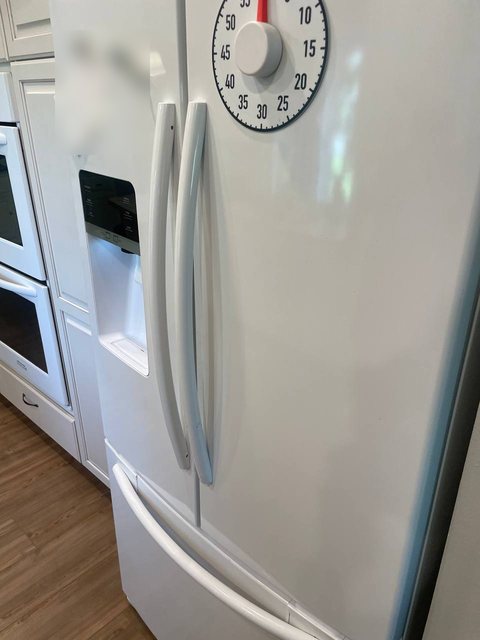
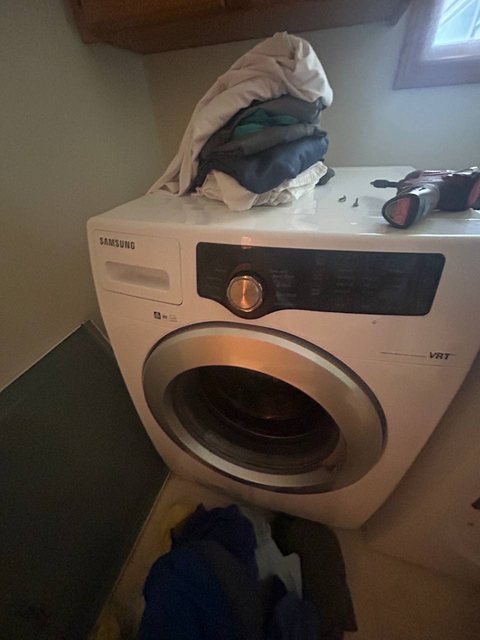
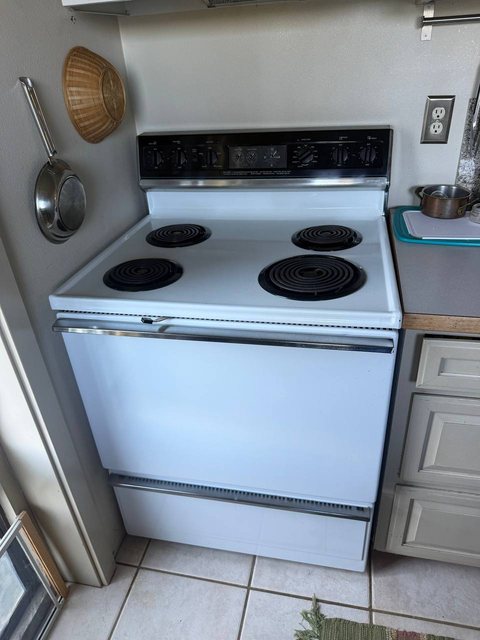
The other five
$99 to diagnose, one written figure, printed coverage — the same for every machine we take in West Olympia.
West Olympia dryers vent through garage walls in 1970s ramblers, out the back of split-levels near Yauger Park, and through short stubs in apartment closets behind Capital Mall.
Weekdays 7:30–5:30 · Saturday 9–1 · closed Sunday · Woodland Square Loop, at the Olympia–Lacey line
$99 to diagnose, one written figure, printed coverage — the same for every machine we take in West Olympia.
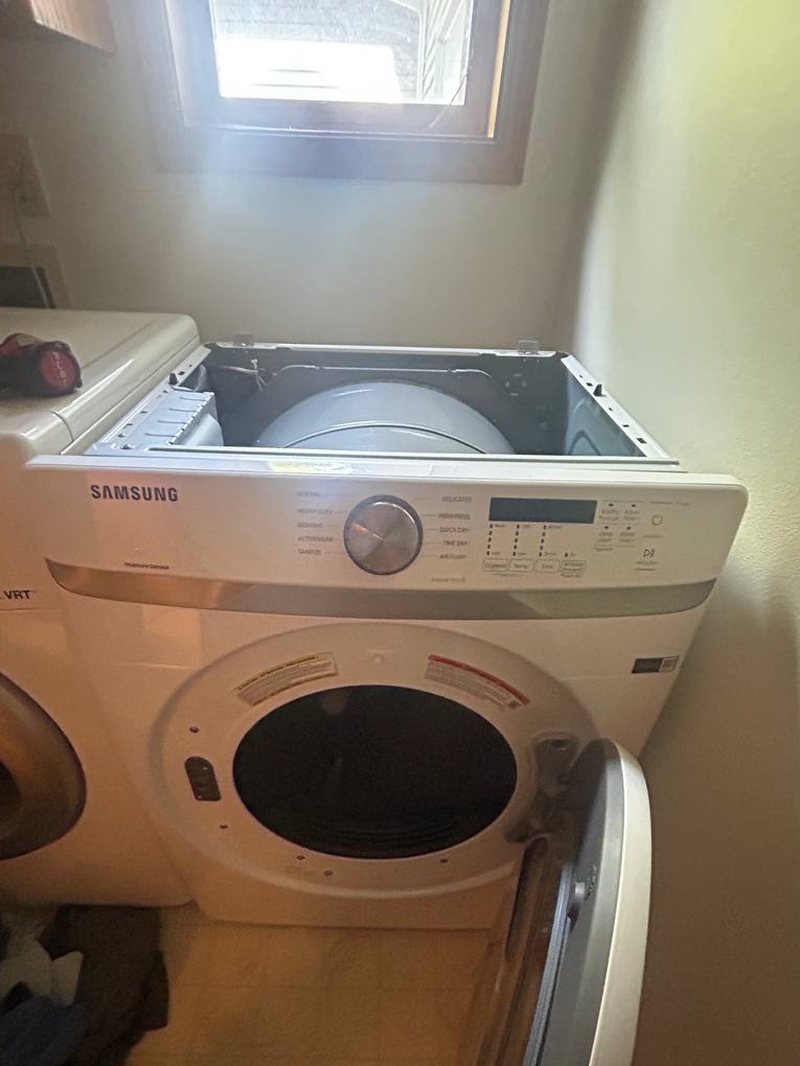
West Olympia is compact and mostly built between the Kennedy years and the first Clinton term, so its dryers follow a few patterns. Ramblers off Division Street usually have the laundry in the garage, with a short vent through the wall that still fills with lint because nobody sees it. Split-levels around Yauger Park vent from the lower floor through a longer run. Apartment closets off Cooper Point Road use flex duct crushed flat behind the machine since move-in day.
PSE natural gas serves most of the neighborhood, so gas dryers are common alongside electric ones, and the propane conversions we sort out on the peninsula seldom turn up here. The west-side pattern is heavy use, cramped installs, and dryers that have quietly outlived their belts and rollers.
A scorched smell in a rambler garage laundry is lint touching the element or gas burner, and the machine should stay off until it is checked. Lint escapes the filter housing, collects in the cabinet and drifts toward the heat. We open the cabinet, remove the accumulated lint, inspect the element and the housing seal, and repair the gap in the filter path that let it through.
A PSE gas dryer that clicks or glows at the igniter but never produces flame has a weak igniter, a failed flame sensor or gas valve coils that have quit opening. On 1990s machines in split-level laundry rooms, the coils are the most frequent culprit. We observe the ignition attempt through the burner access, work down the chain with a meter, and replace the link that is broken.
Older dryers in west-side ramblers use a mechanical timer that depends on the cycling thermostat to move it along. When the thermostat sticks or the timer motor fails, the dryer runs for hours. Newer electronic models stall on a moisture sensor filmed over with softener. We test the thermostat and timer motor, scrub or swap the sensor bars, and verify the cycle ends when the load is dry.
A dryer that overheats has lost its ability to cycle the heat off, usually because the cycling thermostat has welded closed or airflow is so restricted that heat cannot leave. In apartments behind Capital Mall, the crushed flex duct is often the whole story. We replace the thermostat, check the high-limit device, straighten or replace the duct, and measure exhaust temperature afterward.
An electric dryer that knocks out its breaker on start or partway through has a shorted heating element, a failing motor or a bad terminal block where the cord attaches. 1960s and 1970s houses near Harrison Avenue sometimes have a receptacle or wiring that has loosened over decades and heats under load. We test the element for a short to ground and inspect the cord and block before anything else.
When the dryer runs only while the start button is pressed and dies when you let go, the motor's centrifugal switch or the door switch is not holding the circuit. Sometimes a belt that has slipped off keeps the motor from reaching speed. We check the door switch, the belt tension and the motor switch contacts, then replace what is worn so the machine holds its cycle.
For $99 a technician comes to your West Olympia address, tests the dryer, and tells you in plain terms what has failed. You then receive a single written figure for putting it right. Should you approve, the $99 is not an extra line but the first portion of that figure. Should you decline, your entire cost is $99, and you will know exactly what the machine needs if you decide to replace it or wait.
The invoice prints the warranty term for the part and the labor. A component we must order comes back with us without a second visit charge. If the maker's coverage still applies to your dryer, we tell you before we spend your money. Property managers with dryers in the complexes off Cooper Point Road send a text to approve and get their invoice electronically.
West Olympia sends us enough calls that the van heads across US-101 from the Lacey line most days, so a Yauger Park address slots in easily. A dryer call is usually scheduled within the same week and frequently sooner. Tell us the brand, whether it is gas or electric, and what it is doing, and we will bring the likely parts on the first visit.
No. A hot smell means lint or fabric is resting against the element or burner, which is exactly how dryer fires begin. Unplug the machine or shut the gas valve and leave it off until it is inspected. Cleaning out the cabinet and sealing the lint path is a straightforward repair, but only if the machine has not been run in the meantime.
Apartment dryers behind Capital Mall and along Cooper Point Road usually vent through a short run, but the flexible duct behind the machine is crushed flat against the wall from the day the unit was pushed into its closet. That restriction alone can double drying time. We swap the flex for a proper rigid elbow and check the exterior hood.
Both. PSE natural gas serves most of the west side, and gas dryers in ramblers and split-levels are a steady part of our work. Igniters, flame sensors and valve coils ride along on every trip. We test the ignition sequence, check for gas smell at the connection, and confirm the flame burns blue and steady before we leave.
Yes. Landlords with rentals near Evergreen and in the complexes off Cooper Point Road text a yes to the written figure, see the invoice arrive by email, and let the tenant provide access or give us a lockbox code that is deleted when the job closes. The tenant has nothing to arrange or pay.
The price goes on paper before a screw comes out.
Ring or use the form; a phone photo of the display or the model sticker saves a step. We ring back with an arrival window and text again as the van pulls off Woodland Square Loop.
The technician tests the suspect part with instruments, tells you in plain words what gave out, and writes the repair down as a single price. Your $99 is already inside that number.
Fill valves, defrost heaters, igniters, drum rollers, drain pumps, relays — the things well water, salt air and PSE outages wear out on this shore of the inlet. If we have to order something, the second trip is ours to make, not yours to pay for.
You watch the machine finish a whole cycle, the kick panels and the floor go back the way they were, and the warranty term is typed onto the invoice.
Tell us over the phone. For $99 a technician tests the machine and writes the repair down as one price with that $99 folded in, and the invoice carries the warranty term in print.