Also on the truck · Downtown & the Capitol
The other five
$99 to diagnose, one written figure, printed coverage — the same for every machine we take in Downtown & the Capitol.
Most washers downtown live in a closet, stacked under a dryer or squeezed beside a water heater in a Percival Landing condo.
Weekdays 7:30–5:30 · Saturday 9–1 · closed Sunday · Woodland Square Loop, at the Olympia–Lacey line
$99 to diagnose, one written figure, printed coverage — the same for every machine we take in Downtown & the Capitol.
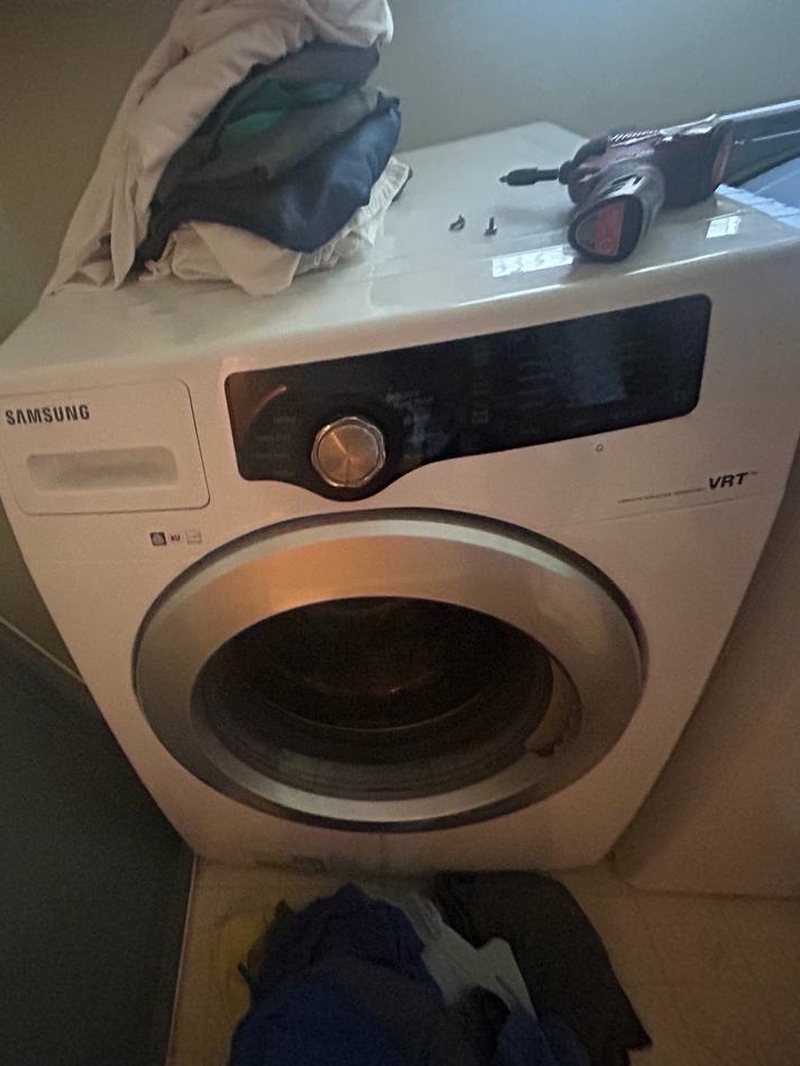
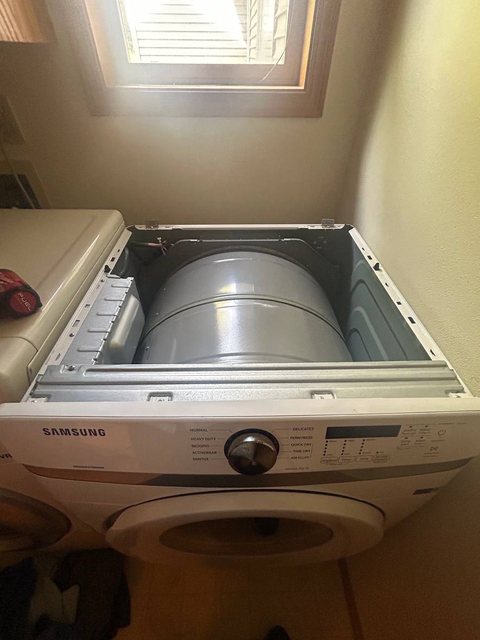
The downtown Olympia washer is rarely a big top-loader in a laundry room. Picture instead a front-loader behind a bifold closet door off the hallway, a compact unit under a counter in a Capitol Way loft, or a stacked laundry center in a building that was offices before it was homes. Access is tight, drains run to a standpipe in the wall, and a leak is a building problem within an hour.
We plan for that. The technician arrives knowing whether the unit is stacked, which way the closet door swings, and whether the building wants a work notice on file. Then the meter comes out, the drain and inlet get tested, and you hear what failed in language a property manager can forward.
In a condo this is the call that cannot wait. Common sources are a split drain hose behind a stacked unit, a door boot sliced by a jacket zipper, or a hairline split in the pump housing. To find the leak we run the machine, swap the part that failed, and make sure the standpipe is actually taking water as fast as the pump sends it.
Front-loaders will not release the door until the drain pump reports the tub is empty. When a sock or coin jams that pump, the door stays shut and the display throws a code. We release the door without damaging the latch, clear the pump, and test the lock assembly so you are not repeating this next month.
An off-balance spin in a wood-framed building rattles the whole wall. We check shock absorbers and suspension springs, confirm the unit is level on a pedestal or stacking kit, and look at the bearing, since a bearing on its way out lets the drum wobble long before it seizes. If a particular comforter sets it off, keep it handy so we can watch that load spin.
Downtown supply lines sometimes run through decades of copper and a shutoff valve that has never been turned. We test the inlet valve solenoids, check the screens for scale from Olympia's moderately hard water, and confirm the building pressure is enough for the machine to reach its fill level before the timer gives up. A slow fill also explains a machine that takes all evening.
European-style 24-inch washers in remodeled lofts are sensitive to voltage and to drain height. When one pauses and beeps, we read the stored fault, test the motor control board and door lock, and check whether the drain hose is looped higher than the manual allows, a common mistake when the closet was built after the machine was bought.
Sealed door boots hold water and detergent residue, and a closet with no airflow makes it worse. We clean the boot, check the drain pump filter for standing water, and swap out any boot that cleaning can no longer save. Then we show you the dispenser and door settings that keep it from coming back. Propping the door open an inch between loads helps too.
Diagnosis runs $99. That buys the testing above, a plain-language name for the component that gave out, and one written quote for the repair. Approve the quote and the $99 sits inside it as part of the total; decline and the $99 closes out the call. Nothing about the repair figure changes because you live downtown rather than out on Cooper Point, and there is no mileage line anywhere inside our ring.
A large share of downtown washers belong to landlords, condo boards, and owners who work in a state office two blocks away. We take approval by text, send the invoice by email with the printed warranty term on it, and delete any lobby or unit code the day the ticket closes. A washer still inside its maker's coverage gets that news from us before any money moves.
Yes, and downtown that describes most of our washer calls. We unstack when we have to, using a lift strap, and bringing a helper when a dolly will not fit the closet. Most repairs on the washer half can be done from the front or by tilting the unit forward without full removal.
Close both supply valves behind the washer and cancel the cycle. Take photos for the building. Then call us and say it is a leak. We prioritize leaks over other washer calls because a wet ceiling downstairs turns a pump repair into a drywall claim within a day or two.
Not dramatically, but it is moderately hard and carries some manganese, so inlet screens clog slowly and dark marks can appear on whites over years. A periodic cleaning cycle and a screen check every couple of years handle it. If you see orange or brown staining, tell us when booking.
No. Many downtown jobs run entirely through a manager or owner who approves by text. We coordinate access with the manager, complete the repair, and email the invoice. We only ask that someone be reachable by phone during the visit in case a decision comes up.
Leaks and locked doors with clothes inside usually get the next open slot. Everything else on a washer is scheduled within the week. We run 7:30 to 5:30 on weekdays and a Saturday morning shift, and we schedule around freight elevator hours if your building has them.
What each code usually points at, what is safe to check, and where to stop.
OPEN THE CODE SHEET →F5E2 · F8E1 · F9E1What each code usually points at, what is safe to check, and where to stop.
OPEN THE CODE SHEET →The price goes on paper before a screw comes out.
Ring or use the form; a phone photo of the display or the model sticker saves a step. We ring back with an arrival window and text again as the van pulls off Woodland Square Loop.
The technician tests the suspect part with instruments, tells you in plain words what gave out, and writes the repair down as a single price. Your $99 is already inside that number.
Fill valves, defrost heaters, igniters, drum rollers, drain pumps, relays — the things well water, salt air and PSE outages wear out on this shore of the inlet. If we have to order something, the second trip is ours to make, not yours to pay for.
You watch the machine finish a whole cycle, the kick panels and the floor go back the way they were, and the warranty term is typed onto the invoice.
Tell us over the phone. For $99 a technician tests the machine and writes the repair down as one price with that $99 folded in, and the invoice carries the warranty term in print.