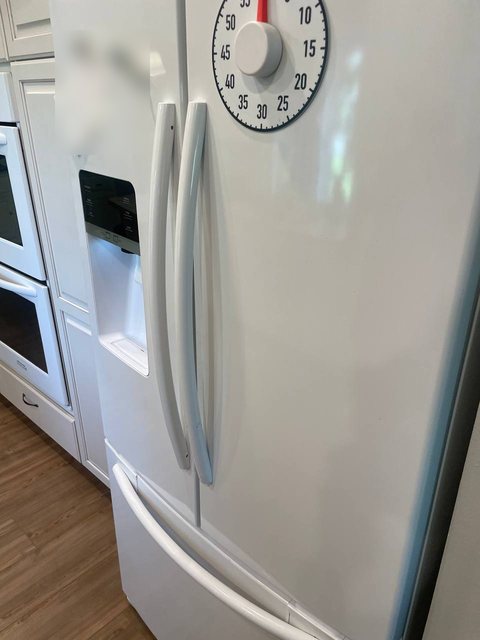
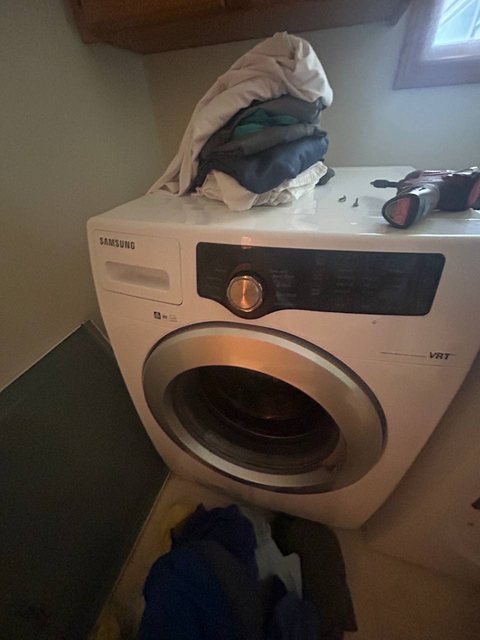
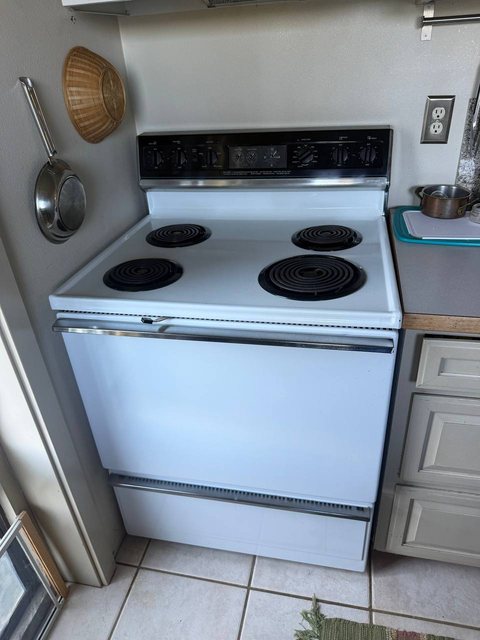
Also on the truck · Downtown & the Capitol
The other five
$99 to diagnose, one written figure, printed coverage — the same for every machine we take in Downtown & the Capitol.
In a mid-rise near Percival Landing the dryer vent may travel forty feet through a chase before it reaches daylight, and a ventless condenser dryer in a Capitol Way loft has its own set of failures.
Weekdays 7:30–5:30 · Saturday 9–1 · closed Sunday · Woodland Square Loop, at the Olympia–Lacey line
$99 to diagnose, one written figure, printed coverage — the same for every machine we take in Downtown & the Capitol.
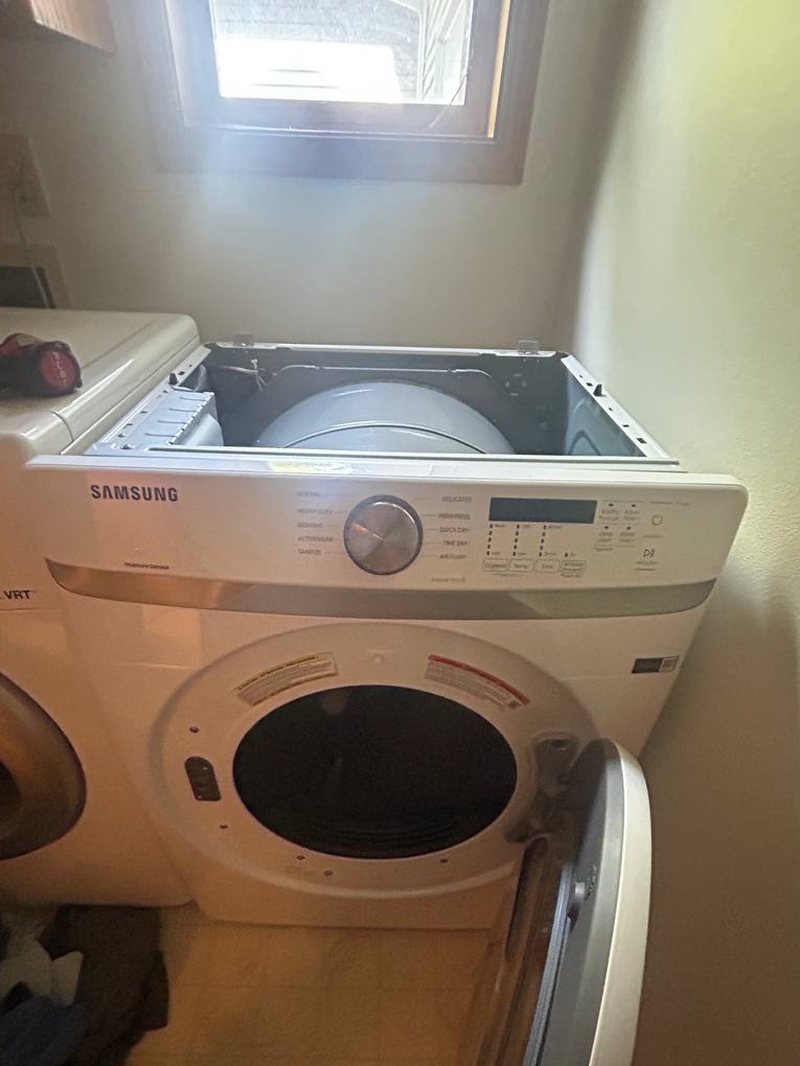
Downtown dryers fail for reasons that have as much to do with the building as with the machine. A vent that runs through a chase to the roof collects lint at every elbow, so the dryer runs hot and trips its thermal fuse. A ventless unit in a loft above 4th Ave pulls room air through a condenser that nobody has rinsed since move-in. A stacked dryer in a closet has a belt nobody can see.
We come prepared for all three. The technician brings a vent gauge to read back-pressure at the machine, a meter for the heating circuit, and the stacking tools to get at a drum motor in a closet you can barely stand in.
In a building with a long vent run, this is usually restriction rather than a bad heater. Our gauge reads the static pressure where the dryer meets the wall, we remove the lint within reach, and when the fault is the building's chase you hear that from us along with a nudge toward a duct contractor. If airflow checks out, we test the cycling thermostat and moisture sensor bars instead.
A 240-volt dryer will tumble happily on one dead leg while producing no heat. We check the outlet and the cord first, then the heating element, high-limit thermostat, and thermal fuse with the meter. A blown thermal fuse points back at airflow, so we look for the restriction that caused it rather than replacing the fuse alone.
Condenser and heat-pump dryers in downtown lofts depend on a clean condenser and a working condensate pump. When the pump fails or the drawer sensor sticks, the dryer stops heating to protect itself. The condenser gets rinsed, the pump and float switch get tested, and on heat-pump models we check the refrigerant-side fan. Emptying the water drawer is the owner's job; the rest is ours.
Humming with no rotation points to a snapped belt, a roller that has seized, or a motor whose start winding is gone. In a stacked unit we tilt or unstack to reach the drum. We replace the belt and idler together when the belt has snapped, since the idler pulley is usually what wore it through.
Drum rollers, glides, and the idler pulley all wear, and in a quiet condo the noise carries through the floor. With the cabinet open we rotate the drum a few inches at a time until the noise gives itself away, then change the worn pieces as a group instead of singly, because the next one in line is never far behind. Rollers rarely fail alone.
Modern dryers watch the door switch, the moisture sensor, and the thermistor and shut down when a reading is out of range. We read the fault from the control, test the sensor it points to, and confirm the fix by running a full timed cycle before we pack up. An intermittent door switch is the usual answer in stacked units, where the door gets shut from an awkward angle.
The visit starts at $99, which puts a technician at the dryer carrying a meter and a pressure gauge, the culprit named without jargon, and a repair figure on the work order. Once you give the go-ahead, the $99 stops being a separate item and lives inside that figure. If you hold off, $99 is where the matter ends. We never quote dryer repairs by phone; a fuse and a motor are different afternoons.
Tell us if your building has rules about who may touch the ducting, and we will work within them. Approval by text from a manager or owner is fine, the invoice arrives by email with the printed warranty term, and we keep a lobby or closet code only until the job is signed off. Weekday hours are 7:30 to 5:30, Saturday 9 to 1.
Very often, yes. Each elbow and every foot of duct adds resistance, and lint settles wherever the air slows. Heat builds, the thermal fuse lets go, and suddenly a healthy dryer looks broken. We measure the restriction so you have a number to give the building, and we fix the fuse only after the airflow is sorted.
Yes. Heat-pump and condenser dryers are common in downtown lofts where venting outside was never an option. We test the condensate pump, clean the condenser, check the sensors, and handle the electrical faults. Sealed refrigerant faults on these are rare, and if that is where yours sits you will hear it from us directly.
It might be. When one side of the double-pole breaker trips, the motor keeps running while the heat is gone. Check the breaker first. If it is fine, the element, high-limit thermostat, or thermal fuse is likely, and all three get tested, so the part you pay for is the one that really quit.
Regularly. The manager or owner approves the repair figure by text, we coordinate access, and the invoice with its printed warranty term goes by email. Codes and keys are not kept past the close of the ticket. Tenants can be present or not, as the owner prefers.
Usually, because the dryer half of a laundry center fails on inexpensive parts such as belts, rollers, fuses, and thermostats. Replacing a whole stacked unit means a matching footprint, a closet that fits it, and moving day logistics in a downtown building. We give you the figure and you decide with real numbers.
The price goes on paper before a screw comes out.
Ring or use the form; a phone photo of the display or the model sticker saves a step. We ring back with an arrival window and text again as the van pulls off Woodland Square Loop.
The technician tests the suspect part with instruments, tells you in plain words what gave out, and writes the repair down as a single price. Your $99 is already inside that number.
Fill valves, defrost heaters, igniters, drum rollers, drain pumps, relays — the things well water, salt air and PSE outages wear out on this shore of the inlet. If we have to order something, the second trip is ours to make, not yours to pay for.
You watch the machine finish a whole cycle, the kick panels and the floor go back the way they were, and the warranty term is typed onto the invoice.
Tell us over the phone. For $99 a technician tests the machine and writes the repair down as one price with that $99 folded in, and the invoice carries the warranty term in print.