Beyond Wolf
Wolf ranges arrived in Olympia's waterfront and Cooper Point kitchens by the dozen through the 2000s, many on propane.
Weekdays 7:30–5:30 · Saturday 9–1 · closed Sunday · Woodland Square Loop, at the Olympia–Lacey line
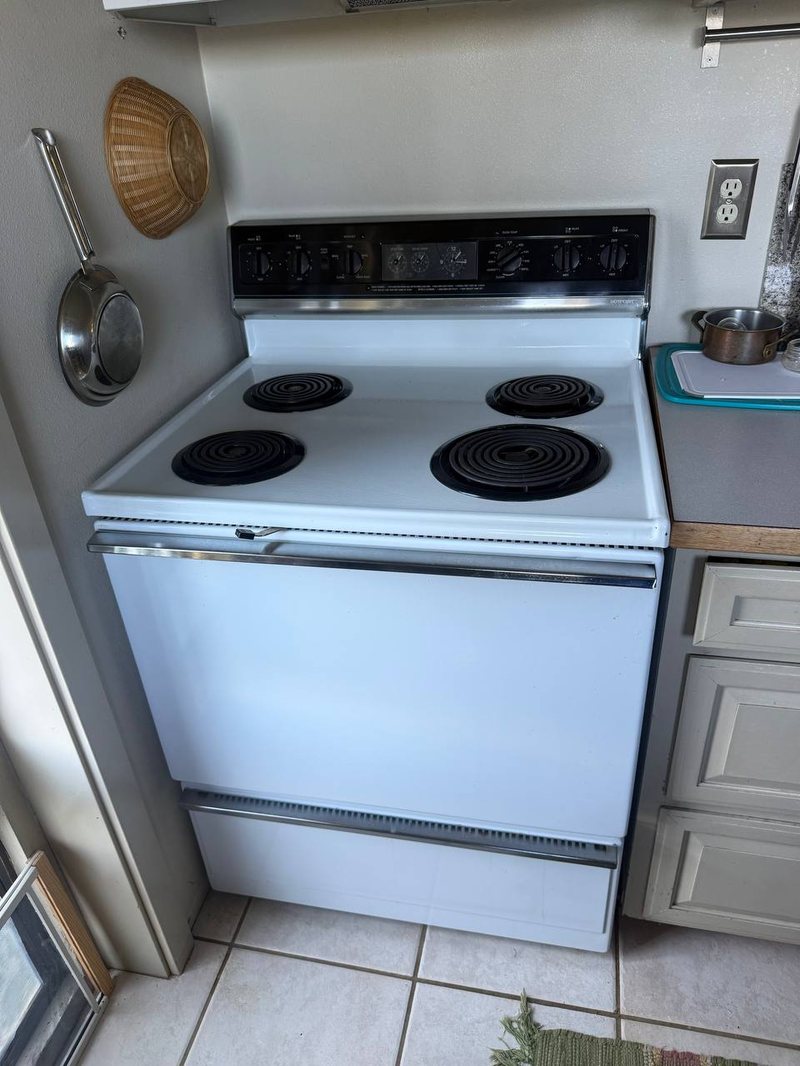
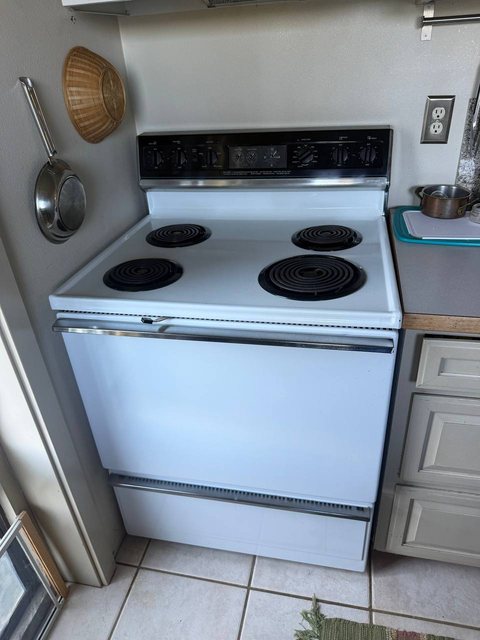
A Wolf range is often the centerpiece of a house that was built or remodeled around cooking: the Steamboat Island home with the view of Totten Inlet, the Cooper Point house on five acres, the South Capitol Craftsman whose kitchen was taken back to the studs. The forty-eight-inch dual-fuel with red knobs, the thirty-six-inch rangetop over a pair of E-series ovens, the newer M-series with the touch display. Wolf builds them to be serviced, and after ten or fifteen years they need it: igniters weaken, spark modules short in the damp, convection fan bearings begin to whine, and the electronic oven controls occasionally lose a relay or a thermistor and put a message on the display.
We are an independent shop working from Woodland Square Loop, just across the Lacey line from Olympia's Eastside, and Wolf has no part in our business. The $99 diagnostic is where every Wolf job begins: a technician at the range with a meter and a manometer, the faulty component identified, and a repair total put in writing before you decide anything. Approving means the $99 is already contained in that total; declining means $99 is the complete cost of our visit and the written finding is yours. Ranges and ovens are scheduled inside the week; if the same kitchen has a Sub-Zero that has gone warm, that gets same-day service on a call before noon.
| Wolf appliance | Symptom at the range | Where it usually traces | Repair |
|---|---|---|---|
| Gas rangetop or range burners | One burner sparks continuously, or every burner sparks when one knob is turned | Igniter electrode cracked or soaked after a boilover, or a spark module shorted through a damp harness | Dry every electrode and test it, swap the cracked one, change the module if it keeps firing with the switch open |
| Dual-fuel range oven (DF series) | Oven slow to heat, bakes unevenly, or shows an error on the display | Bake element, convection element or oven thermistor drifting; occasionally a relay board that will not close | Meter elements and thermistor, read the stored code, replace the part the readings point to |
| All-gas range oven | Oven clicks and never lights, or lights after a long delay with a gas smell | Hot-surface igniter weakened below the current needed to open the oven valve | Measure igniter amperage under load, replace the igniter, verify valve opening and flame pattern |
| Wall ovens, E and M series | An error message appears, or the door stays locked after self-clean | Door lock motor or switch out of position, a thermistor reading out of range, or a control that lost a relay | Read the error, cycle and test the lock, meter the thermistor, replace control or lock by serial range |
| Induction cooktop | One zone dead or flashing, pan not recognized, or a whole side out after a storm | Pan-detection fault, a generator board damaged by a surge, or a lost leg of the 240-volt supply | Check both supply legs, test the generator boards, replace the board or coil the tests identify |
| Convection fan, any oven | Whine or grinding when the fan runs, fan stops and the oven bakes unevenly | Fan motor bearings worn, or the fan blade rubbing after the motor shaft has shifted | Replace the convection motor and blade, confirm balance and airflow |
| Signal on the display | Likely meaning | Our procedure |
|---|---|---|
| Error message with a number (E-series, M-series ovens) | The control has logged a fault and wants service; the number identifies which sensor, lock or relay circuit misbehaved | Read the number at the control, test the circuit it names rather than guessing, replace the component that fails |
| Continuous clicking at a burner | Not a display code but the most common Wolf complaint; in most cases a wet or cracked igniter, sometimes a spark module that has shorted | Dry and inspect every electrode, test the module, replace what is cracked or shorted |
| Flashing symbol on an induction zone | The cooktop does not detect a suitable pan, or that zone's coil or board has faulted; a dead whole side usually means a lost supply leg | Verify pan and supply voltage first, then test the zone's coil and generator board |
| PROBE shown with no probe inserted | The meat-probe jack is reading a short, often from moisture or a bent pin, so the oven waits for a probe temperature | Clean and dry the jack, test its resistance, replace the jack if it stays shorted |
| Door LOCKED after self-clean will not release | The lock did not return because the oven is still hot, or the lock motor or switch has failed | Allow cooling, then test the lock motor and switches and replace the assembly if needed |
Propane is the local twist. Steamboat Island, Griffin, Summit Lake, Delphi and much of Black Lake have no natural gas, so Wolf ranges out there run on LP, and every one of them depends on a conversion done right: the correct orifices, the regulator turned to LP, the air shutters set. We meet ranges with yellow lifting flames and sooty grates because a step was skipped, and we correct the setup with a manometer rather than by eye. Damp matters too. Wet October-to-May air gets into spark modules and igniter harnesses, and a Wolf that clicks all night in January is usually telling you about moisture, not a bad board.
Wolf parts are tied to serial ranges, and an igniter or control for one production run may not fit the next, so we ask for the serial plate when you book and order to that number. Igniters, electrodes, thermistors and door lock parts commonly travel with us; boards and convection motors are ordered to the serial and fitted on a follow-up that adds nothing to the written total. The invoice carries a printed warranty period for the part and the labor. Owners of second homes on Steamboat Island or condos along West Bay Drive can text their approval, have the invoice emailed, and trust that any gate code is wiped at job close. We are independent, and if your Wolf is still inside the maker's own coverage we tell you before spending anything.
In most cases moisture from a boilover or from cleaning has reached the igniter electrode or the spark module, and the module fires continuously. Drying the area often stops it for a while. A cracked electrode or a shorted module needs replacement, and we test each one before deciding which.
Possibly, depending on age and the component. We are independent and have no arrangement with Wolf, so we check the serial against the coverage terms and tell you before any work if the maker should be handling it. That may be the better route for you, and we prefer saying so to selling you a repair.
Yes. Propane Wolf ranges out on Steamboat, Griffin and around Summit Lake come up in our schedule constantly. We check the orifices, the regulator position and the burner air adjustment with a manometer and correct anything that was missed, and we carry the igniters and electrodes those ranges wear out.
You can try a power reset at the breaker for a minute, and sometimes that clears a transient fault. If the message returns, the control has found a real problem with a sensor, lock or relay circuit and it needs testing. Note the exact message and number and tell us when you book; it shortens the visit.
It helps a great deal. Wolf changed igniters, thermistors, controls and lock assemblies across serial ranges within the same model, and the serial tells us which version to bring. A photo of the plate, usually behind the drawer or inside the oven door frame, is enough. Without it we still come; the part may just take a second trip.
The price goes on paper before a screw comes out.
Ring or use the form; a phone photo of the display or the model sticker saves a step. We ring back with an arrival window and text again as the van pulls off Woodland Square Loop.
The technician tests the suspect part with instruments, tells you in plain words what gave out, and writes the repair down as a single price. Your $99 is already inside that number.
Fill valves, defrost heaters, igniters, drum rollers, drain pumps, relays — the things well water, salt air and PSE outages wear out on this shore of the inlet. If we have to order something, the second trip is ours to make, not yours to pay for.
You watch the machine finish a whole cycle, the kick panels and the floor go back the way they were, and the warranty term is typed onto the invoice.
Tell us over the phone. For $99 a technician tests the machine and writes the repair down as one price with that $99 folded in, and the invoice carries the warranty term in print.